The Sacred vessel containing the Holy Physical Remains of His Eminence Yongdzin Tendzin Namdak Rinpoché
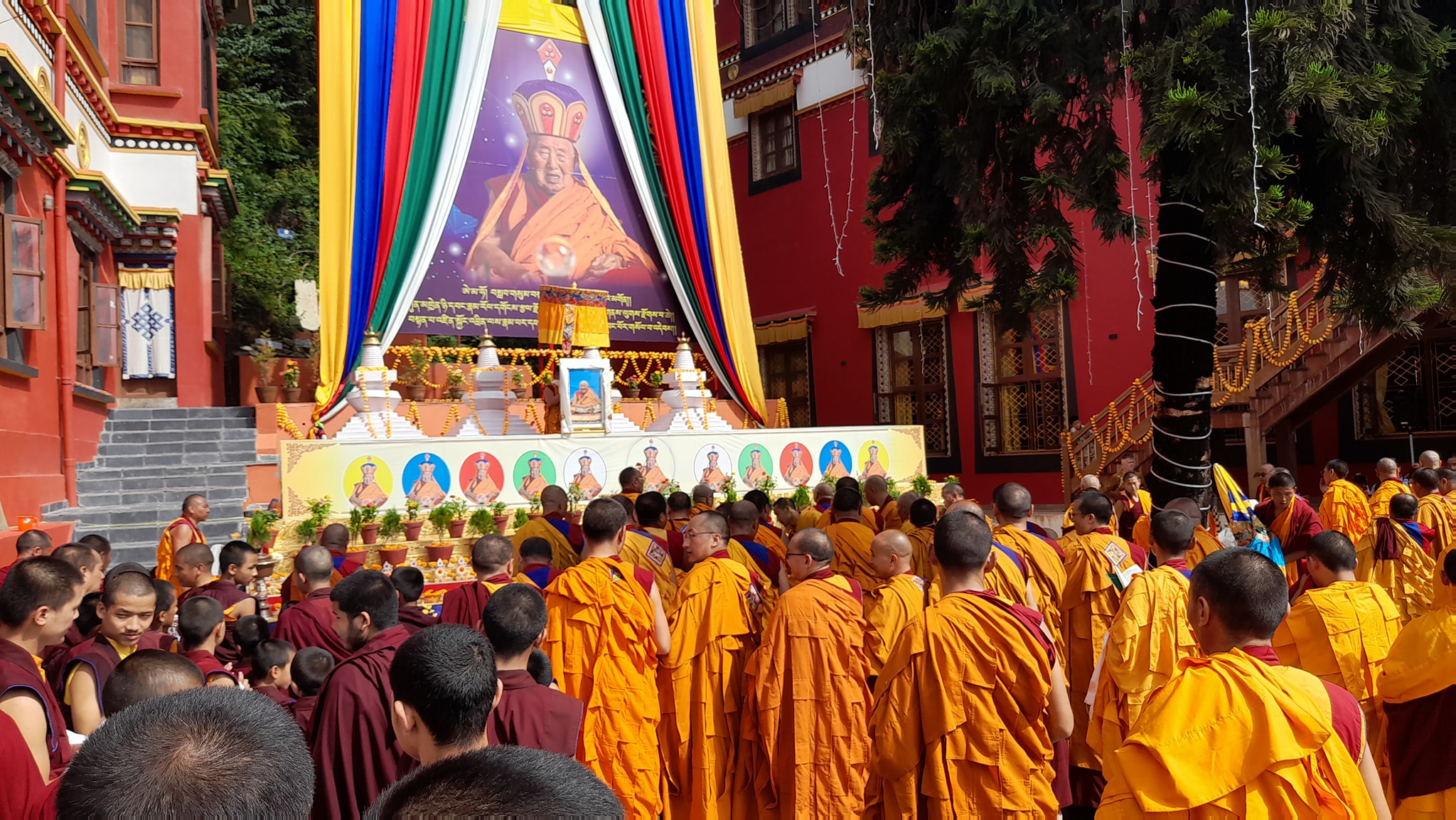
Since the parinirvana of the esteemed and greatly beloved master, His Eminence Yongdzin Tenzin Namdak Rinpoché, the worldwide Yungdrung Bön community has been observing a 49-day period of veneration, prayers, and offerings to receive blessings and accumulate great spiritual merit. On Friday August 2, 2025 this 49-day period concluded. From August 4th to August 9th, an extensive fire offering rite according to the cycle of the Künrig Le Zhi Gyün Nga‘i Jin Sek will be performed. During this time on August 6th, the actual cremation of the holy physical remains will take place. TheKünrig Le Zhi Gyün Nga‘i Jin Sek, is one of the primary texts in the Yungdrung Bön religious tradition used for cremation rites and the continuous fire offerings that take place. For this, a great variety and quantity of offerings are being prepared. Among these offerings are many large and small boards written with mantras and prayers that will be read by the officiating lama, consecrated with blessed substances, and then placed into the fire.
Offerings for the fire offering rites
A great accumulation of fire offerings
During these rites, the holy physical remains will be cremated in a specially built chorten [Sanskrit: stupa]. After the conclusion of the ritual, once the ash from the offering rites has cooled, it will be carefully collected along with any relics and saved to be placed into a reliquary chorten that will be built to hold the relics along with a variety of other sacred objects and substances. Additionally, many sa tsa will be made that will be filled with some of the cremation ash and distributed to faithful disciples and supporters.
Construction of the cremation chorten at Triten Norbutsé Monastery
Did you enjoy this content? This article is made possible by generous donors who want content like this to continue to be available.
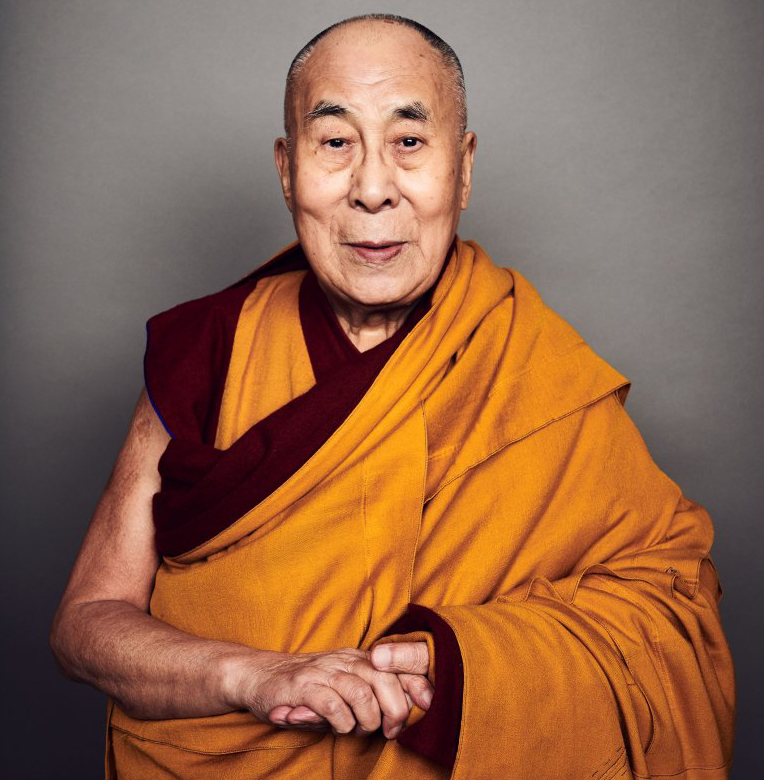
July 6th is celebrated as the birthday of the one born as Lhamo Döndrup, recognized at the age of two and formally installed at the age of fifteen, as the leader of the Geluk school of Tibetan Buddhism and therefore both the spiritual and secular leader of Tibet. Upon his enthronement, he was renamed Jetsun Jampel Ngawang Lobsang Yeshe Tenzin Gyatso: Holy Lord, Gentle Glory, Compassionate Defender of the Faith who is an Ocean of Wisdom. He is known as Yizhin Norbu Rinpoche, the Precious Wish-fulfilling Jewel, and referred to as Gyalwa Rinpoche, Most Precious Conqueror, by Tibetans. He is known around the world as His Holiness the 14th Dalai Lama.
The title Dalai Lama was first given in 1578 C.E. to Sonam Gyatso, leader of the Geluk school of Tibetan Buddhism, by the Mongolian leader Altan Kahn who had just received teachings from him. The term Dalai Lama is a combination of the Mongolian word dalai meaning ocean, and the Tibetan word lama commonly meaning spiritual master and literally translated as mother of the soul, or highest mother. Sonam Gyatso became known as the 3rd Dalai Lama because the two previous leaders of the Geluk school were posthumously awarded the title. Beginning with the 5th Dalai Lama in the 17th century, the authority and influence of the Dalai Lamas expanded beyond sectarian boundaries into all schools of Tibetan Buddhism as well as becoming enjoined with the secular function of governing the country of Tibet.
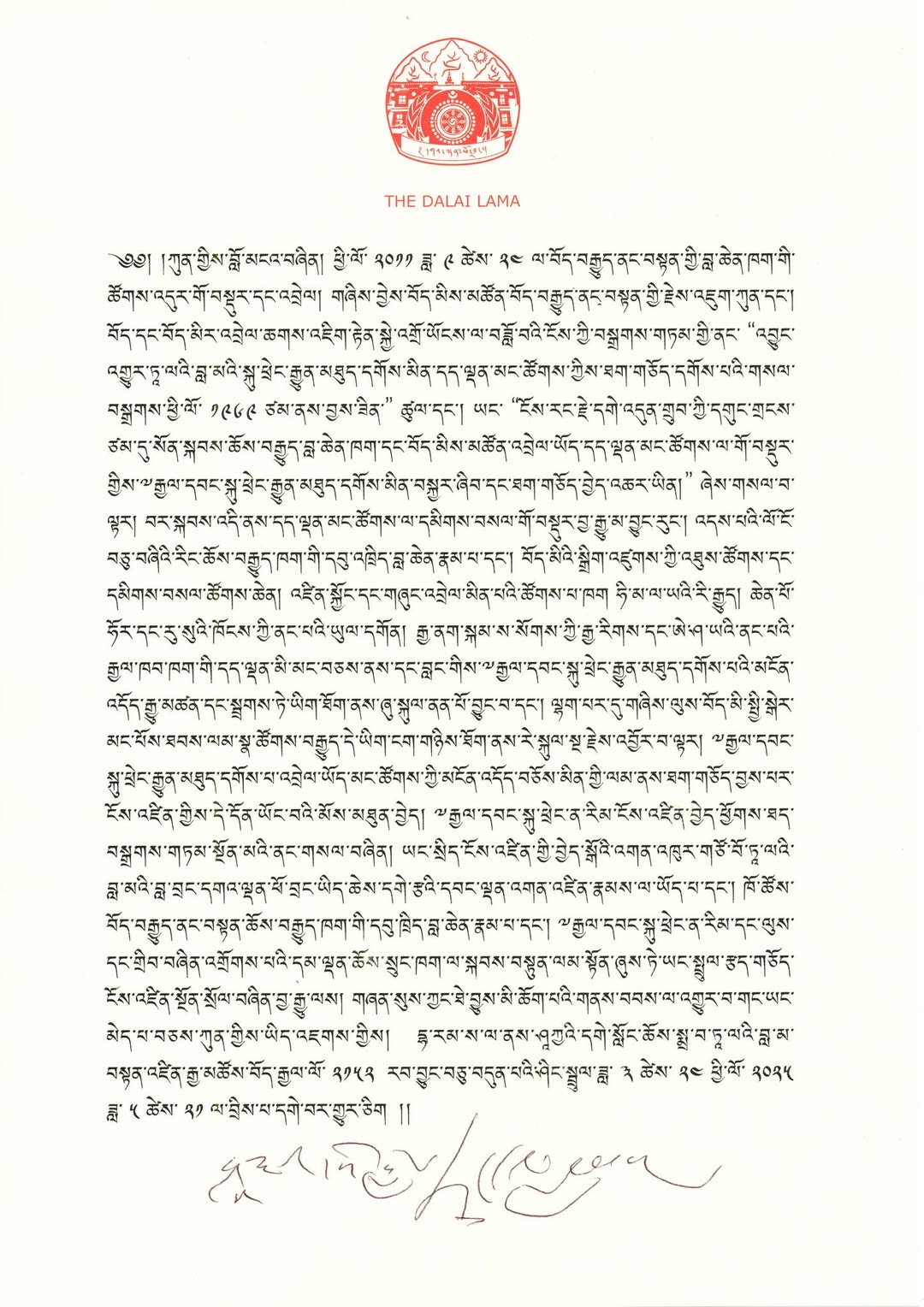
Upon the occasion of his 90th birthday, His Holiness the 14th Dalai Lama has issued a public statement regarding the continuation of the Dalai Lama lineage.
Statement Affirming the Continuation of the Institution of Dalai Lama
(Translated from the original Tibetan)
On 24 September 2011, at a meeting of the heads of Tibetan spiritual traditions, I made a statement to fellow Tibetans in and outside Tibet, followers of Tibetan Buddhism, and those who have a connection with Tibet and Tibetans, regarding whether the institution of the Dalai Lama should continue. I stated, “As far back as 1969, I made clear that concerned people should decide whether the Dalai Lama’s reincarnations should continue in the future.”
I also said, “When I am about ninety I will consult the high Lamas of the Tibetan Buddhist traditions, the Tibetan public, and other concerned people who follow Tibetan Buddhism, to re-evaluate whether or not the institution of the Dalai Lama should continue.”
Although I have had no public discussions on this issue, over the last 14 years leaders of Tibet’s spiritual traditions, members of the Tibetan Parliament in Exile, participants in a Special General Body Meeting, members of the Central Tibetan Administration, NGOs, Buddhists from the Himalayan region, Mongolia, Buddhist republics of the Russian Federation and Buddhists in Asia including mainland China, have written to me with reasons, earnestly requesting that the institution of the Dalai Lama continue. In particular, I have received messages through various channels from Tibetans in Tibet making the same appeal. In accordance with all these requests, I am affirming that the institution of the Dalai Lama will continue.
The process by which a future Dalai Lama is to be recognized has been clearly established in the 24 September 2011 statement which states that responsibility for doing so will rest exclusively with members of the Gaden Phodrang Trust, the Office of His Holiness the Dalai Lama. They should consult the various heads of the Tibetan Buddhist traditions and the reliable oath-bound Dharma Protectors who are linked inseparably to the lineage of the Dalai Lamas. They should accordingly carry out the procedures of search and recognition in accordance with past tradition.
I hereby reiterate that the Gaden Phodrang Trust has sole authority to recognize the future reincarnation; no one else has any such authority to interfere in this matter.
Dalai Lama
Dharamshala
21 May 2025
His Holiness the 14th Dalai Lama with His Eminence Yongdzin Tenzin Namdak Rinpoche.
Around the world on this day, devotees will begin the day with a large fumigation and smoke offering, and then present offerings and prayers to an image of His Holiness the Dalai Lama. Especially on this day, there will be many prayers for his long and healthy life.
Prayer for the Long Life of His Holiness the 14th Dalai Lama
Gang ri ra wé kor wé zhing kham su In a heavenly realm, surrounded by a chain of snow mountains,
Pen dang dé wa ma lü jung wé né The source of all happiness and help for beings
Chenrezik wang Tenzin Gyatso yi Is Tenzin Gyatso, Chenrezik in person.
Shyap pé kal gyé bar du ten gyur chik May his life be secure for hundreds of eons!
Did you enjoy this content? This article is made possible by generous donors who want content like this to continue to be available. Join the mandala of Nine Ways supporters by following this link: https://ravencypresswood.com/donate/
Don’t want to miss a post? Scroll to the bottom and click “Follow this blog.”
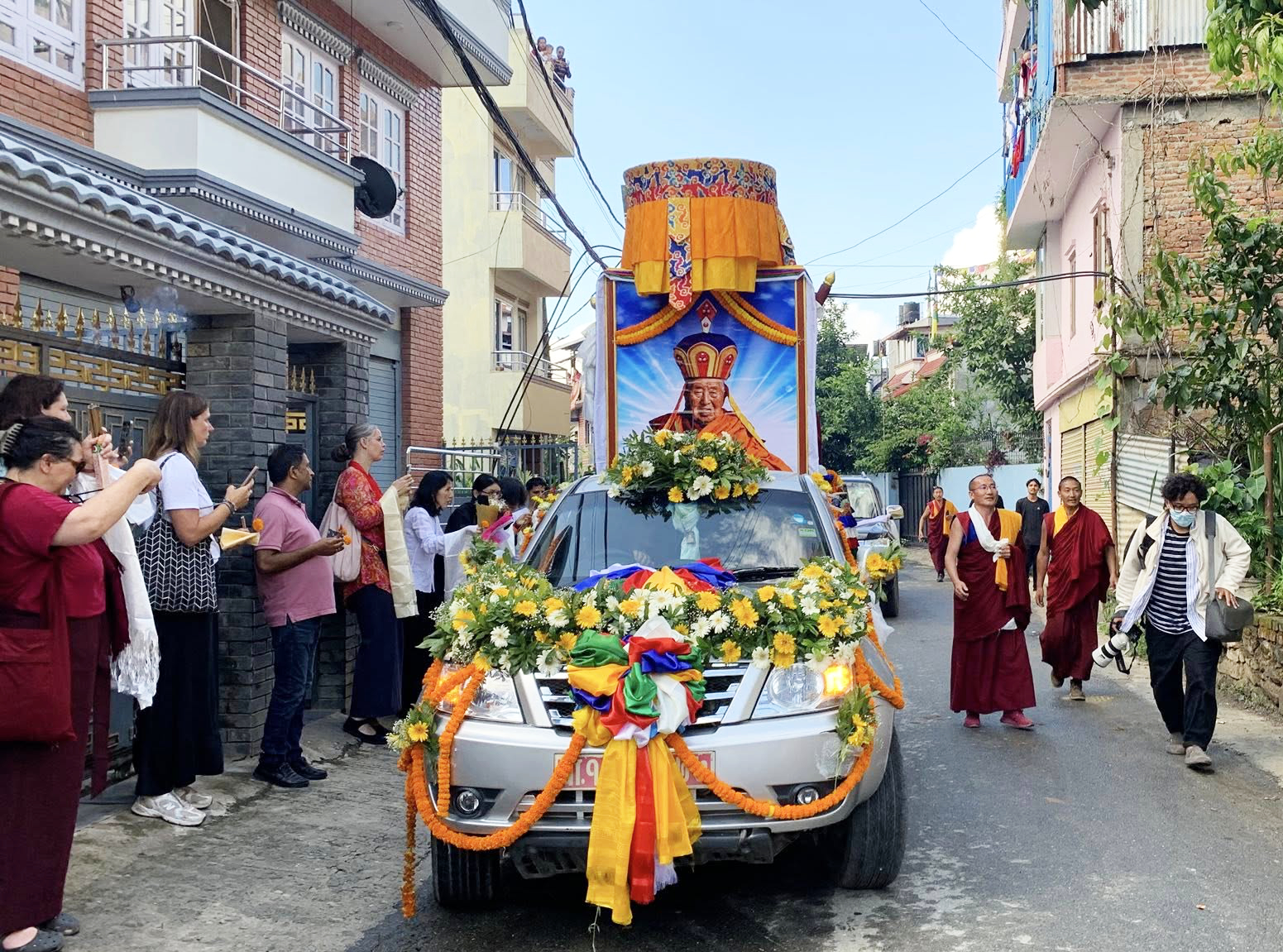
His Holiness the 34th Menri Trizen, His Eminence Menri Pönlop, Khenpo Ronpoche and others escort the sacred Ku dung to be installed at Triten Norbutse Monastery
On the evening of June 20, 2025 with wondrous signs in the environment, the lord of refuge His Eminence Yongdzin Tendzin Namdak Rinpoche passed from his state of tukdam and left his sacred physical remains. On June 21, 2025, accompanied by His Holiness the 34th Menri Trizen, His Eminence Menri Pönlop Rinpoche, Khenpo Tenpe Yungdrung Rinpoche, and other khenpos, geshes, and an ocean of faithful disciples, the sacred remains were escorted to Triten Norbutsé Monastery.
The road was lined with faithful followers, and the path to the monastery was ornamented with auspicious symbols drawn with golden flowers. There were victory banners flowing, sweet-smelling incense, and the sacred sound of drums, cymbals, and chanting filled the air.
The precious remains were installed at the monastery with auspicious signs. The monastic community presented the five offerings and repeatedly made fervent prayers of praise and aspirations. The times for visiting and viewing the sacred remains by the faithful will soon be announced.
Did you enjoy this content? This article is made possible by generous donors who want content like this to continue to be available. Join the mandala of Nine Ways supporters by following this link: https://ravencypresswood.com/donate/
Don’t want to miss a post? Scroll to the bottom and click “Follow this blog.”
Nuns of Rayna Menling reading from the teachings of Buddha Tönpa Shenrap
Each year at Pal Shenten Menri Monastery and Rayna Menling Nunnery on the 14th and 15th lunar days of the 4th month, the enlightened teachings of Lord Buddha Tönpa Shenrap Miwoché are read out loud. In 2025, these dates coincide with June 10th and 11th on the Western calendar. The sacred volumes containing these teachings are carried by both the ordained and laypeople as they circumambulate the temple. As a sign of respect for the sacredness of these texts, they are carried above the waist. Most often, they are carried on the shoulder. After bringing them into the temples, offerings such as incense are presented, and the text are distributed to the ordained for two full days of reading. Reading the scriptures aloud is considered one of the thirteen activities for a meaningful human life. (See previous article: https://ravencypresswood.com/2020/03/21/the-thirteen-yungdrung-bon-activities-for-a-meaningful-human-life/) For those inspired to read the words of Buddha Tönpa Shenrap on these days, The Beneficial Mantric Praise of Künsal Jamma Chenmo, The Jamma Ngak Tö, is considered a root text for the practice of Sherap Jamma that was spoken by the Buddha himself. Through the verses of praise for each of the syllables of Jamma’s root mantra, the profundity of the innumerable manifestations of Jamma is revealed. The teaching and transmission for this text has been widely shared in both the East and West.
“The mantra of the twenty-one victors, the praise of the Victorious Jamma of Bön, was spoken by the Victor Tönpa Shenrap. These twenty-one verses are, without exception, beyond cyclic existence and a completely pure practice. By reciting out loud the twenty-one praises, one will obtain immeasurable benefits. Praise to Tönpa Shenrap for revealing these twenty-one praises of the root mantra!”
Extract from The Beneficial Mantric Praise of Künsal Jamma Chenmo
His Holiness the 34th Menri Trizen, His Eminence Menri Pönlop Rinpoche, and other monks of Menri Monastery carry texts containing the words of Buddha Tönpa Shenrap.
The canon of sacred Yungdrung Bön texts is divided into two categories. The first category of texts contains the teachings of the primordial enlightened ones and Lord Buddha Tönpa Shenrap. This category is known as Ka [Tibetan: bka’] meaning “enlightened words or speech.” These texts are further divided into four primary categories: (1) Dō [Tibetan: mdo], Sutra, (2) Bum [Tibetan: ‘bum], The Hundred Thousand, (3) Gyü [Tibetan: rgyud], Tantra, and (4) Dzö [Tibetan: mdzod] The Treasury. In some catalogues, there can also be a fifth category of miscellaneous texts. Although each Yungdrung Bön temple in Tibet had a significant collection of Ka scriptures, the collections were not necessarily complete. This was especially due to repeated persecution throughout history of the Yungdrung Bön tradition which necessitated the hiding of texts. It is thought that only one complete collection survived. According to a catalogue of the Ka done by the 23rd abbot of Menri there are a total of 175 volumes. This number can vary according to various collections due to the availability of texts that could be copied, whether only main titles were counted as a volume, and so on. Regardless, the Sutra section contains texts such as the hagiography of Buddha Tönpa Shenrap, The Ritual Practice of the Medicine Buddha, The Root Scripture for Jamma, the four volumes of medical texts, and so on. The Hundred Thousand section contains the sixteen volumes of the Khams Gyé, The Unsurpassed Scripture Regarding the Eight Realms, the Yum Dō, The Heart Sutra of the Mother of the Great Vehicle, and so on. The Tantra section includes the Buddha’s teachings of the Mother Tantras, the Father Tantras, Phurba, Walsé, and so on. The Treasury section includes the teachings of dzogchen such as The Aural Transmission of Zhang Zhung.
“Gyajin, a ruler of the gods, rose from his seat and, having removed his upper robe from one of his shoulders, he set his right knee upon the ground. Having placed his hands together, he made a request of The Teacher with these words: “Free from the fault of wrongdoing, you have perfected every good quality. You are the source from which arises all happiness and exalted qualities. Good omniscient Shenrap, what should one do to practice or make use of the Essence of the Mother of the Great Vehicle?”
In response to that, Shenrap bestowed his teaching.
“Gyajin, ruler of the gods, and all you yungdrung sempa, when practicing or making use of the Essence of the Mother of the Great Vehicle, all phenomena that arise from worldly existence, that arise as precious ornaments, that arise as an appearance, that arise from emptiness, that arise from individual clarity, that arise from self-awareness, that arise from the changeless and indestructible vast expanse, or that arise from equanimity; are neither appearance nor emptiness, neither existent nor nonexistent, neither eternal nor nothingness, neither born nor negated. Why is that? All of those, in every way, are unobjectifiable. Even their self-nature is unobjectifiable. Therefore, they are primordially without a source and without a birth. They have no beginning. Abiding within the equanimity of no beginning is the unfabricated, perfected, single sphere.“
Extract from The Heart Sutra of the Mother of the Great Vehicle to be published in the forthcoming A Mala of Blazing, Wish-fulfilling Jewels: A Collection of Daily Practices of the Yungdrung Bön Religious Tradition by Raven Cypress Wood
Monks and nuns of Menri Monastery circumambulating with the scriptures of the Ka.
The second category of canonical texts is known as the Ka Ten [Tibetan: bka’ brten], Relying upon the Words. The Bön canon is referred to within Bön texts as the Ka and the Ka Ten. (This differs from the Buddhist canon which is referred to as the Kangyur and the Tengyur.) The Ka Ten includes commentaries, practices, rituals, and so on that rely upon the scriptures of the Ka for the root text. In order for a text to be included in the Ka Ten, it must undergo a rigorous and methodical analysis. There are over 300 volumes included within the Ka Ten. Some catalogues do not include texts after the 14th century which are thought to be mainly texts of the New Bön tradition. Other catalogues do include these texts as well as the collective writings of other Bön sages such as Shardza Tashi Gyaltsen. Additionally, many texts are incredibly rare and are guarded from outsiders. Therefore, few if any copies of these texts exist. Some texts are considered valid to be included in the Ka Ten by some, while being considered invalid and thus excluded by others. Titles can be included within unrelated volumes or counted individually, and so on. Even so, it is generally accepted that there are over 300 volumes of Ka Ten scriptures. These volumes include commentaries and practices based upon scriptures of the Ka such as The Practice Manual of the Aural Transmission of Zhang Zhung by Dru Gyalwa Yungdrung, scriptures of philosophy and logic, biographies, historical accounts, compositions of sacred songs, poetry, and advice for disciples, collections of liturgical texts, and so on.
I, of inferior intelligence, but for the benefit of beings and for the sake of explaining at least part of the meaning, will explain the Sky Ladder to Freedom, an Abridged Commentary of the Meaning of the Heart’s Blood of Bön, the Mantric Praise of Jamma. If one were able to explain the commentary on the merits of Jamma in great detail including the characteristics of each of the deities, it would amount to twenty-one great chapters in many volumes. ”
Extract from A Sky-Ladder to Freedom: An Abridged Commentary Regarding the Meaning of the Words of the Mantric Praise of Jamma, the Deity Who Protects From All Things composed by the great 23rd abbot of Menri Monastery His Holiness Nyima Tenzin Rinpoche
Traditionally wrapped and labeled Yungdrung Bön scriptures.
This article is made possible by generous donors who want content like this to continue to be available. Want to join the mandala of Nine Ways supporters? Follow this link https://ravencypresswood.com/donate/
Don’t want to miss a post? Scroll to the bottom and click “Follow this blog.”
The 5th day of the 1st lunar month is the birth celebration of His Holiness the 1st Menri Trizin Nyammé Sherap Gyaltsen Rinpoché who is known as the second buddha in the Yungdrung Bön religious tradition. In 2025, this date coincides with March 4th on the Western calendar. His Holiness Nyammé Sherap Gyaltsen Rinpoché was a reincarnation of Yikyi Khye’u Chung, one of Buddha Tönpa Shenrap Miwoche’s sons. He reunited the three transmission lineages of sutra, tantra and dzogchen that had become widely dispersed, and he founded one of the largest Yungdrung Bön monasteries in Tibet, Tashi Menri Ling.
Born in 1356 C.E. in the region of Gyalrong into the esteemed Dru lineage, as a child, he could recite mantra and read scripture without having studied. At the age of ten, he decided to become a monk. In 1387 C.E. at the age of 31, he entered the prestigious Yeru Wensaka monastery and eventually became its abbot. While he was traveling in Eastern Tibet, Yeru Wensaka was destroyed by flooding and mudslides. Upon returning, he searched the ruins of the monastery for any salvageable artifacts. With these precious objects, he established Tashi Menri Monastery on higher ground within the same valley. It was 1405 C.E. and he was 50 years old.
Cloak belonging to the precious lord Nyammé Sherap Gyaltsen Rinpoche. Photo credit: Unknown
In 1415 C.E. at the age of 60, he left the shell of his physical body. His body levitated high into the air, but due to the fervent prayers of his disciples, the body returned to the earth. During the cremation, rainbows appeared and a large bird circled three times around the cremation area before disappearing into the West.
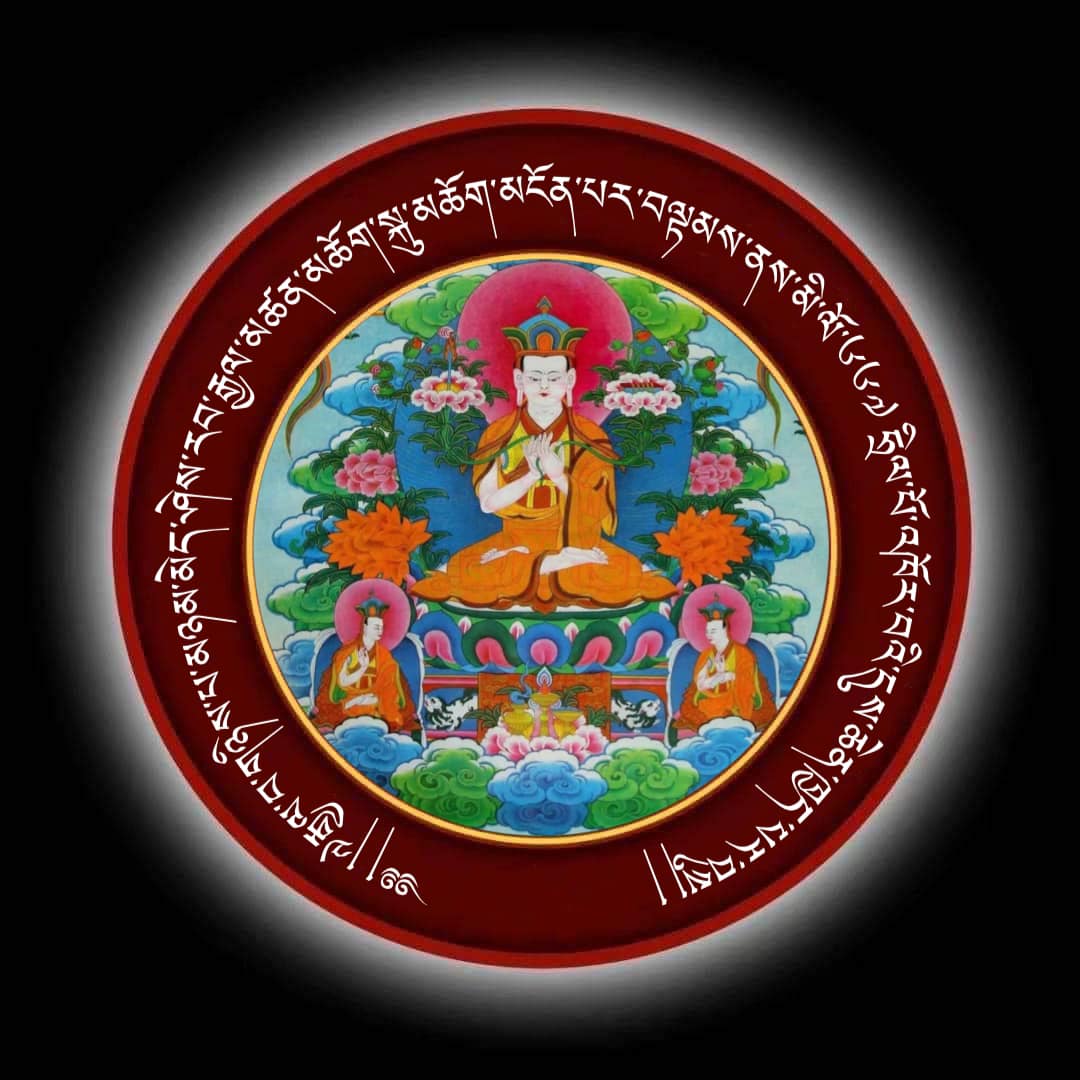
Today, Bönpos will spend the day with their eyes looking skyward. If they are lucky enough to be visited by a vulture on this day, it is said to be an auspicious sign of having directly received the blessings of the one known as the Second Buddha, the Unequaled One, His Holiness Nyammé Sherap Gyaltsen Rinpoché.
Among his numerous writings, is the commonly recited Eight-branched Aspiration Prayer, Mönlam Yenlak Gyepa. When offering aspiration prayers, we imagine that every sentient being is offering the prayers in unison with us. This limitless group of beings includes humans, nonhumans, unseen spirits, and those we consider “enemies.” All sound is perceived as the sound of the prayer being recited and the vastness of space is imagined as filled with buddhas and bodhisattvas that are delighted by the virtuous activity that spontaneously activates their immeasurable compassion. By offering the prayers in this way, and then dedicating the merit of the practice for the welfare of all sentient beings, the power of the practice is inconceivable and the benefit is sealed and can never be destroyed.
The English language translation of the Eight-branched Aspiration Prayer, Mönlam Yenlak Gyepa is publicly available for personal use and can be downloaded from the Publications page of this website. Click on the Publications tab above and then scroll down to the download link.
The Writings of His Holiness Nyammé Sherap Gyaltsen Rinpoche*
Cycle of Supplication and Aspiration Prayers
Praise of the Four Supreme Places of Refuge
Offering and Praise to Mawé Sengé
Supplication Prayer to the Mawé Sengé Lineage
Praise of Venerable Essence of [the] Dru [Family Lineage]
Eight Characteristics of Tséwang’s Eight Sacred Places
Stages of Chanted Supplications
Eight-branched Aspiration Prayer, A Ladder to Freedom
Homage to the Charactristics of the Aural Transmission Shenraps
The Gift of the Physical Body
Condensed Peaceful Chö of Gifting the Body
Command for the Gods and Demons
Cycle of Fumigation and Fulfillment
Stages of Preliminary Practices for a Completely Pure Fumigation Offering
A Small Collection Regarding the Medicine Deity Generation Stage
Supplication and Requesting Consideration from the Marvelous Ones
Invocation of the Practice Lineage
Special Fulfillment
A Completely Pure River of Requesting Consideration and Supplication
Burnt Offerings of the Treasury of Precious Terma
General Fulfillment from a Bundle of Precious Terma
A Precious Mala of Fumigation Offerings
Fumigation Offering to the Powerful Ones
Fumigation Offering to Sigyal
Fumigation Offering to Black Mule Sigyal from the Precious Terma
Sigyal’s Manifested Realization
Sigyal’s Threadcross Practice
A Brief Paper on Sigyal’s Threadcross
A Brief Paper on Black Mule Sigyal’s Feast Offering
Short Fulfillment Practice of Black Mule Sigyal
Practice of the Black Net Threadcross
The Shining Lamp of Realization of the Red and Black Threadcross
Commandments for the Avowed Guardians of the Teachings
Important Points regarding the Fulfillment of Midü Jampa
Fumigation Offering to Midü
Offering and Fulfillment to Drak Tsen
Fumigation Offering to Drak Tsen
Invocation of Nyipangsé
Command for Nyipangsé
Command for the Queen of the Drala
Gyalpo Sheltrap Torma Offering and Fulfillment
A Brief Invocation of Sheltrap
Praise in Appreciation of the Fumigation Offering
Supplement to the Fumigation Offering
Generation Stage for the Fulfillment Torma
Celebration of Nyammé Sherap Gyaltsen Rinpoche. Photo credit: Unknown
Cycle of Supplementary Texts for the Practices of Accomplishment
Destroying the Door to Negative Rebirths
Realization of the Completely Pure Lotus of the Vast Expanse
Mantric Accomplishment of Shenrap Nampar Gyalwa
Fire Offerings of Nampar Gyalwa
Realization of the Yungdrung Sutra of the Vast Expanse
Going for Refuge according to the Vast Expanse
Practice of Künzang’s Luminous AH
Stages of Meditative Stabilization
Text for Künzang’s Luminous AH
Stages of Realization for Walsé
Accomplishing the Essential Through the Realization of Walsé
Purification and Increase of Torma
Accomplishment of Sending Out and Gathering Back with Mantra Accumulation
Practice of the Secret Mantra Lineage
Realization of Black Garuda Walsé
Clarifying the Realization of Black Garuda Walsé
Expanding the Realization of the Amazing Trowo
Secret Quintessential Instructions for the General Practice of the Amazing Trowo
Invitation, Homage, and Confession of Wrongdoing for the Reversal Practice of the Great Red Trowo
Inviting the Wisdom Zema
Aspiration Prayer for Threadcross Practice
A Lamp that Clarifies the Meditative Focus of Secret, Greatly Wrathful Gekhö
Supplication to the Gekhö Lineage
Complete Supplication, A Rainshower of Blessings
Practice of the Secret Wrathful Lineage
The Irreversible Mantra of Gekhö, A Golden Razor
Supplement to Presenting Offerings to the Gekhö Deities
Realization of Walpur, Ornaments of Fire
Fulfillment of the Walpur Lineage
Outline for the Empowerment and Teachings of Walpur, A Rainshower of Blessings
Empowerment and Teachings of Walpur, A Rainshower of Blessings
Realization of Tséwang Tartuk
Accomplishment of Tséwang Tartuk
Fire Offerings to Tséwang
Introduction for Empowerments
Musical Notations for Festivals
Cycle of Science
Tikles and Channels of Relics and the Physical Body of Those Gone to Bliss
Clarification regarding the characteristics of colored powders, A Magical Mirror
Cycle of Authoritative Commentaries
Analyzing the Characteristics of The Magical Lamp Text
Analyzing the Characteristics of The Magical Lamp Autocommentary
Clarification of the Limits of All Knowable Things
Commentary Regarding the Sutric and Tantric Explanations of the Stages of the Vehicles
Text of the Grounds and the Paths
Autocommentary of Text of the grounds and the paths
A Clear Lamp for the Path of Liberation
Commentary Regarding the Clear Explanation of the Abridged Kham Gyé
Commentary Regarding the Two Truths in the Middle Way, A Magical Lamp
A Commentary of Clear Advice Regarding Monastic Discipline
Commentary of Condensed Discipline
Renewing Monastic Discipline
Commentary Regarding Cosmology
Clarifying Secret Points
Detailed Analysis of the Secret Vows
Hidden Commentary on the Mind of Enlightenment, Mandala of the Sun
* Although this list is extensive, it is not the complete list of compositions
Don’t want to miss a post? Scroll to the bottom and click “Follow this blog.”
This website has always been supported by the donations of the worldwide Yungdrung Bön community. Want to join the mandala of Nine Ways supporters? Follow this link https://ravencypresswood.com/donate/ It’s easy through Paypal and Zelle.