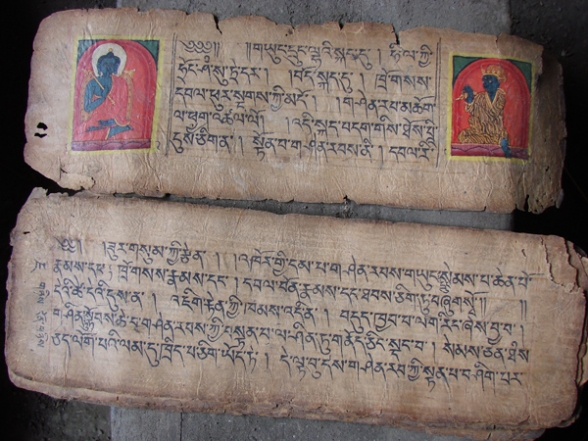
This old, illustrated scripture begins with the phrase, “In the language of the sacred Yungdrung…”
This old, illustrated scripture begins with the phrase, “In the language of the sacred Yungdrung…”

Illustration of the Supreme Deity Sangpo Bumtri from an old Yungdrung Bon text
Sipa Sangpo Bumtri, Deity of Phenomenal Existence, is one of the Four Transcendent Lords of the Yungdrung Bön. The other three are The Great Deity Shenlha Ökar, The Great Mother of Space Satrik Ersang and Lord Tönpa Shenrap Miwoche. These Four Deities are traditionally displayed together in every Yungdrung Bön temple and are often surrounded by the 1,000 Enlightened Beings.
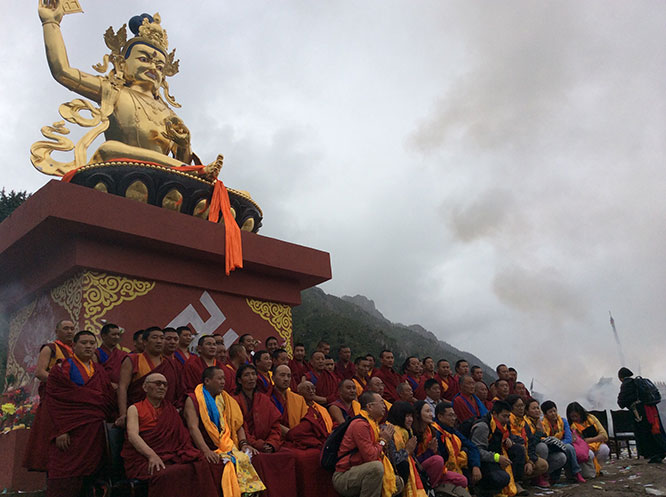
On September 1, 2014 in Amdo, Tibet, an official consecration ceremony was held for the newly erected statue of the Lord of the teachings, the Great Lama Drenpa Namkha. The sacred image was erected at the Yungdrung Bön monastery of Gamal Gomchen which is the largest in the area. The consecration was performed by the great abbot Sherap Yungdrung Wangyal Rinpoche, Ponlop Menri Geshe Sherap Tharchin, the supreme tulku of Dangri Do Ngak Shedrup Gyaltsen and many other lamas and monks from the five main monasteries and the thirteen branch monasteries. Additionally, there were many well known and respected Yungdrung Bön practitioners present.

The supreme tulku of Dangri Do Ngak Shedrup Gyaltsen
The sacred statue was erected by the supreme tulku of Dangri, Do Ngak Shedrup Gyaltsen, for universal benefit and especially for the benefit of the Amdo region. This is the first time that such a statue of the Great Lama Drenpa Namkha has been erected in this area of Tibet.
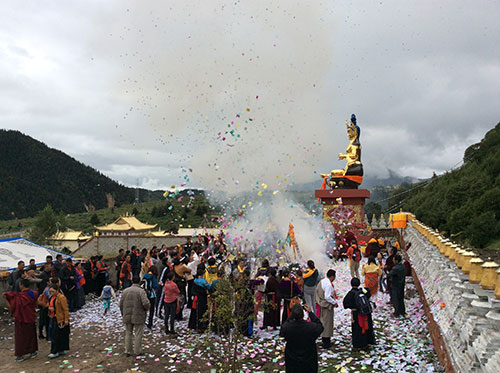
Official Consecration Ceremony for the Sacred Image of Lachen Drenpa Namkha
The sacred image was empowered with countless sacred and blessed objects from knowledge holders and superior beings of the past from both Zhang Zhung and Tibet. In particular, these countless sacred objects included a collection of objects of support for enlightened Body, Speech, and Mind from the great masters of this area of Amdo.

Countless blessed and sacred items to be placed inside the sacred image
The original article appeared on the Tibetan language website Himalayan Bon. You can read the full article and see more photos by following the link:http://www.himalayabon.com/news/2014-09-05/451.html#jtss-fb
Over 18,000 years ago, the founder of the Yungdrung Bon tradition was born into a human body and was known as the Supreme Shen, the Enlightened Teacher, Buddha Tonpa Shenrap Miwoche. He had many students and his teachings flourished in the ancient kingdom called Zhang Zhung.
This ancient kingdom included what is now Western Tibet and the sacred Mount Tise, also known as Mount Kailash. The Zhang Zhung language includes forty letters, and according to Yungdrung Bön texts, these ‘Forty Magical Letters’ were taught by Tonpa Shenrap Miwo. The two standard scripts were called Zhang Zhung mar chen and Zhang Zhung mar chung, ‘excellent capital letters of Zhang Zhung’ and ‘excellent lesser letters of Zhang Zhung.’
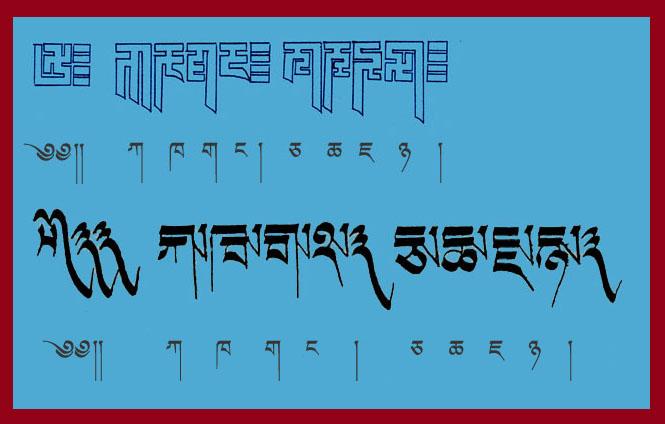
Above, a sample of Zhang Zhung mar chen. Below, a sample of Zhang Zhung mar chung. Both have the corresponding Tibetan script underneath. (Zhang Zhung fonts from the website: himalayabon.com)
The divine words of the Buddha Tonpa Shenrap were written down using this script. Due to the murder of King Ligmincha of Zhang Zhung by king Trisong Detsen of Tibet in the 8th century, the Zhang Zhung kingdom fell and the power and influence of Tibet increased. Therefore, the Zhang Zhung script was transformed and called ‘Tibetan’. According to the ‘Far-reaching Lamp of Clarity’:
“Mar chen was changed into [the formal Tibetan] u chen script, and mar chung was changed into informal script.”
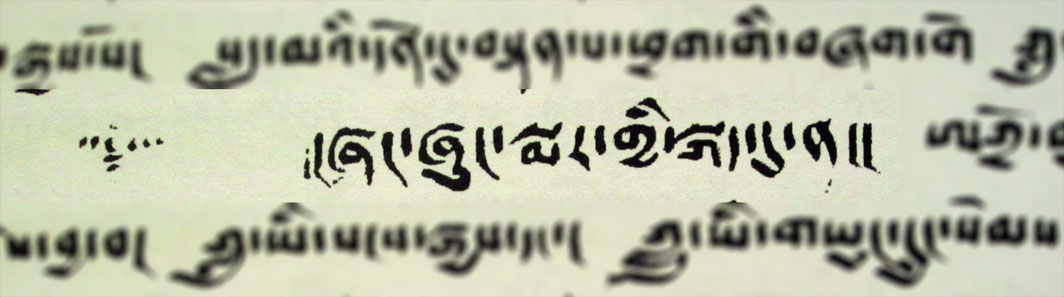
A Yungdrung Bon ritual text begins a section with “According to the language of Zhang Zhung Mar…”
Today, the titles of many Yungdrung Bön texts are written in both the Zhang Zhung mar chen script as well as in the Tibetan script. Additionally, many Zhang Zhung words are found within the texts and even significant section headings are given in both the Zhang Zhung and Tibetan language.

The title page from a Yundgrung Bon text with the title written in Zhang Zhung script above and Tibetan script underneath.
For more information regarding the Zhang Zhung language: (all English language sources)

 Nine Ways