Category Archives: Iconography

The Field of Accumulation: Lamas of the Renowned Three Cycles of Secret Mantra

Tsok zhing according to Menri

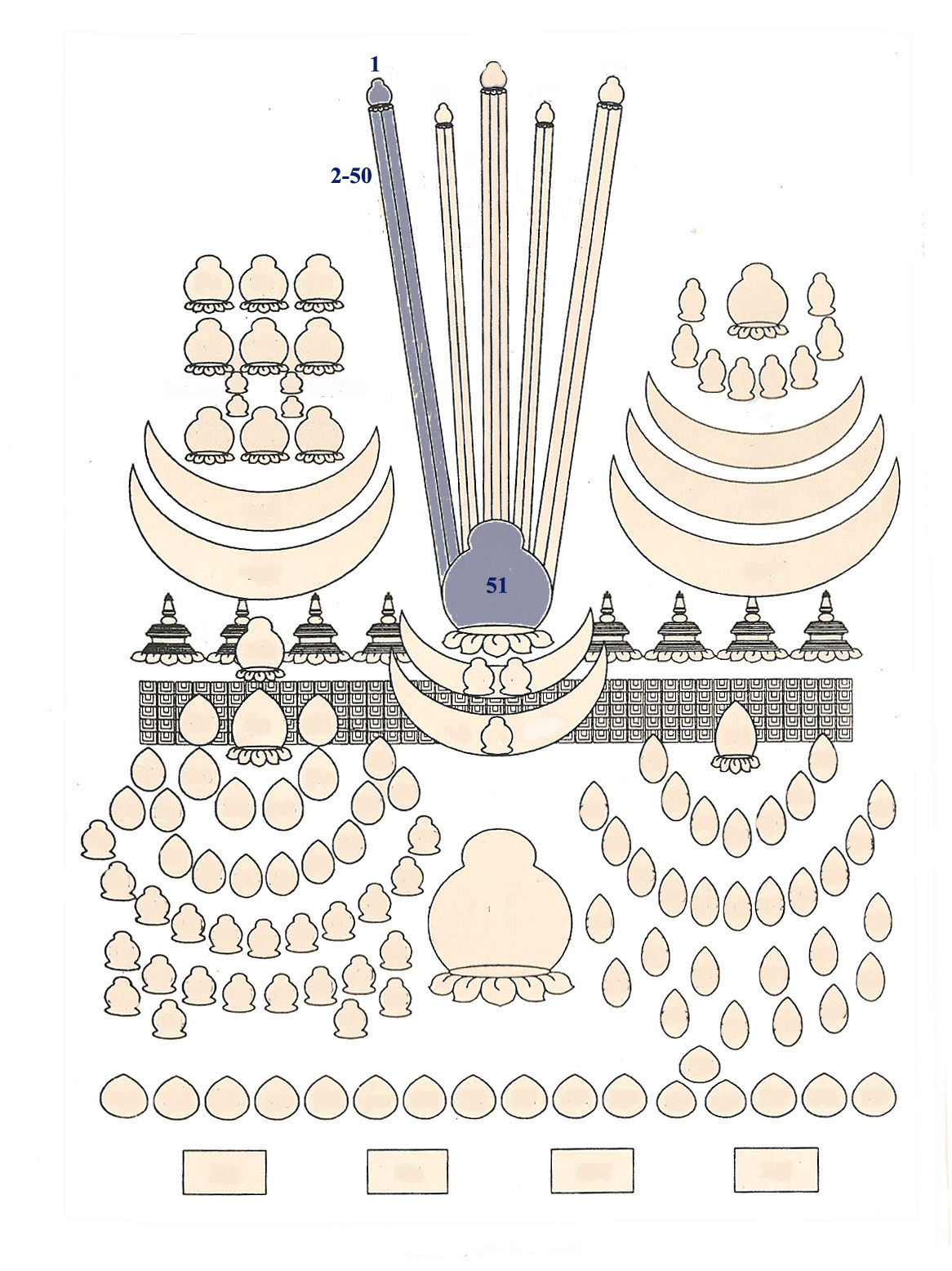
In the Yungdrung Bön tradition, the place where the deities and objects of veneration are gathered is called the “Tsok Zhing”, the “Field of Accumulation”.  It is also sometimes translated as the “Field of Merit” or the “Merit Field” because what is being accumulated by paying homage and making offerings to this place is merit, or virtue.  This is the Merit Field according to the Menri Tradition from a drawing done by the great master and scholar His Eminence Yongdzin Tenzin Namdak Rinpoche.
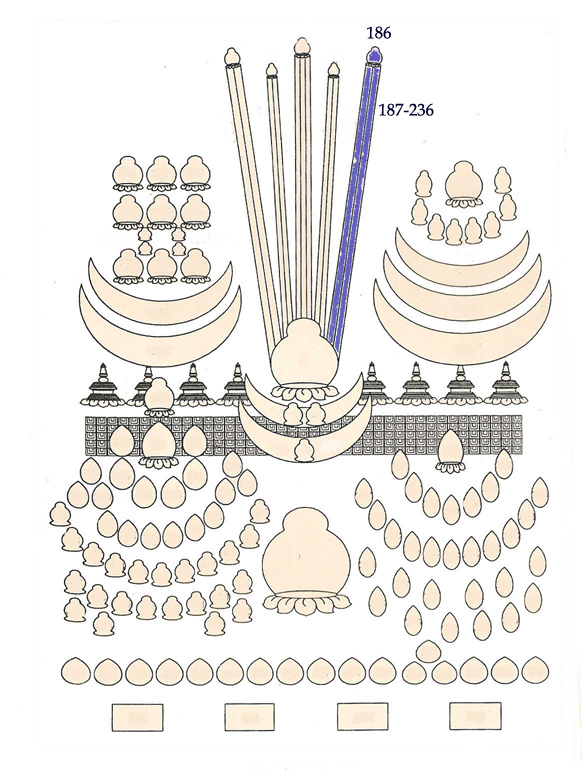
Outline guide for tsok zhing TANTRA

This is the lineage of tantra and these lineage masters wear the clothes of yogis, tertons or revealers of hidden sacred treasure, or monks accordingly.  These profoundly pure masters of tantra have all accomplished the attainments of practice.

1. Trulshen Nangden was the incarnation of Lord Tönpa Shenrap before he manifested in Olmo Lungrik.  Transforming himself into a blue cuckoo, he alighted upon the shoulder of the deity Zangza Ringtsun.  This caused a subtle, internal heat.  As a result, he was miraculously born to her as Chimé Tsukpü.

2. Zangza Ringtsun was an emanation of the enlightened wise, loving Mother, Sherap Chamma who received the teachings of the Secret Mother Tantra from the primordial Buddha.

3. Chimé Tsukpü was miraculously born to Zangza Ringtsun.

4. Sangwa Düpa is cited in some texts as the previous incarnation of Buddha Shakyamuni.

5. Takla Mebar was a prince of Tazik.

6. Lhashen Yongsu Dakpa spread the teachings among the gods.

7. Milu Samlek was known for his intelligence and wrote separate commentaries for each of the three cycles of the Mother Tantra: outer, inner, and secret.  He spread the teachings in the human realm.

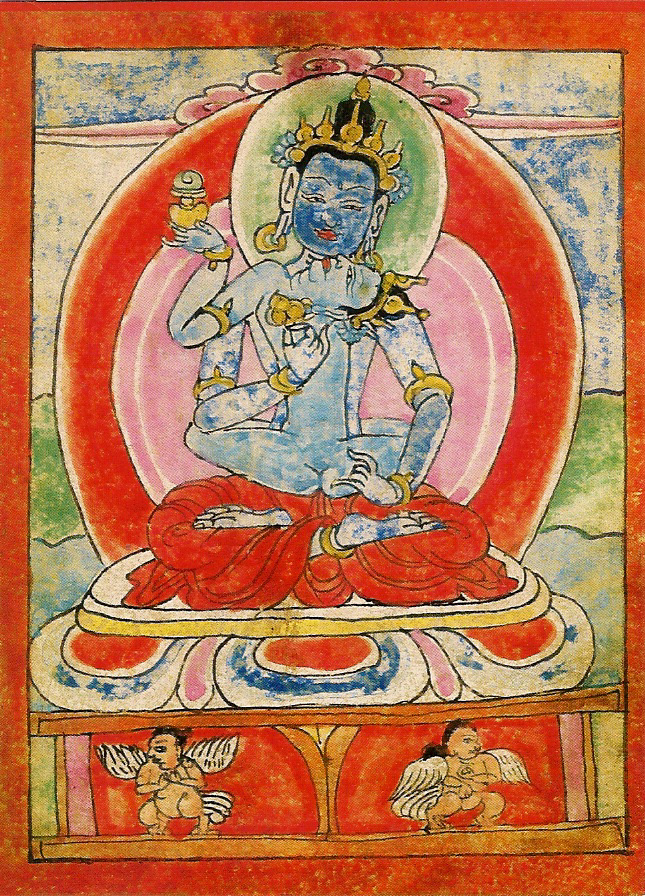
8. Ludrup Yeshe Nyingpo was born to parents who had been childless for a long time.  After making offerings and praying to the lu, or naga, a child was born to them.  He spead the teachings among the lu.
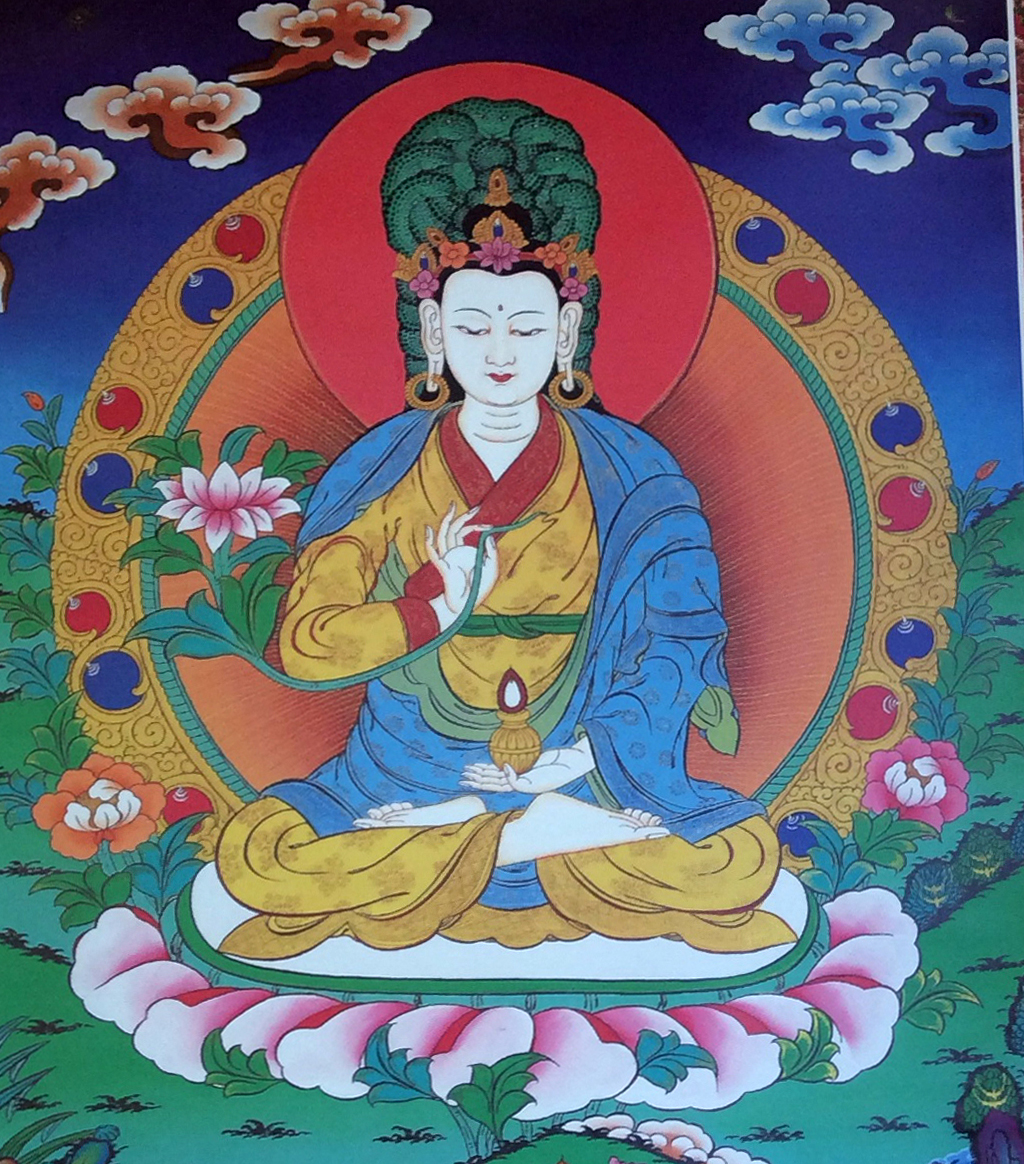
Lama Ludrup Yeshe Nyingpo

9. Nangwa Dokchen transmitted the teachings to the son of the first Tibetan king.

10. Mutri Tsenpo was the son of the first Tibetan king, Nyatri Tsenpo.  He invited one hundred eight esteemed scholars of Zhang Zhung to Tibet.  After him, these teachings were not taught for three generations due to political obstacles.

11. Hara Chipar received the teachings from the four magical khandro of the elements of earth, fire, water and air in order to keep the teachings from further decline.

12. Takwer Liwer was a female practitioner and achieved supernatural powers.  She could tame wild animals and also transform herself into anything that she wished.  The spirits of earth and water obeyed her commands.  After living for three hundred sixty years, she achieved the fruit of realization, the rainbow body of light.

13. Anu Traktak practiced on Mount Tise (Kailash) and lived for two hundred fifty-five years.

14. Sené Ga’u was born in Zhang Zhung and had many teachers.  It is said that he could cure leprosy simply by looking at the patient.  He achieved the rainbow body of light.

15. Tami Teké lived for two hundred seventy-seven years and achieved supernatural powers.

16. Shebu Rakhuk lived for two hundred years and achieved supernatural powers.

17. Zingwa Tüchen was a Chinese practitioner and lived for two hundred sixty-one years.

18. Pébön Toktsé

19. Pébön Toktrul lived for one hundred thirty-five years.

The Four Great Scholars: 20-23 These four scholars translated many Yungdrung Bön texts from the Zhang Zhung language into Tibetan.

20. Tonggyung Tüchen

21. Shari Uchen was a previous manifestation of the modern day saint, Shardza Tashi Gyaltsen Rinpoche.

22. Gyimte Machung

23. Chetsa Kharbu

24. Hripa Gyermé

25. Mutsa Gyermé gave the text Zi Ji to the 14th century master, Loden Nyingpo in a vision.

26. Drenpa Namkha was born in 753 AD.  In general, there are three Drenpa Namkha that are incarnations of the previous one.  1) Drenpa Namkha of Tazik 2)Drenpa Namkha of Zhang Zhung who was a prince and is commonly referred to as La Chen, the great lama.  It was this Drenpa Namkha that married an Indian Brahman girl and had twin sons, Tsewang Rikdzin and Pema Tongdrol.  3) Drenpa Namkha of Tibet who saved many Yungdrung Bön texts from destruction during the persecution of Bön by the Tibetan kind Trisong Detsen.  See previous post, “Practice of the Great Lama, Drenpa Namkha.”
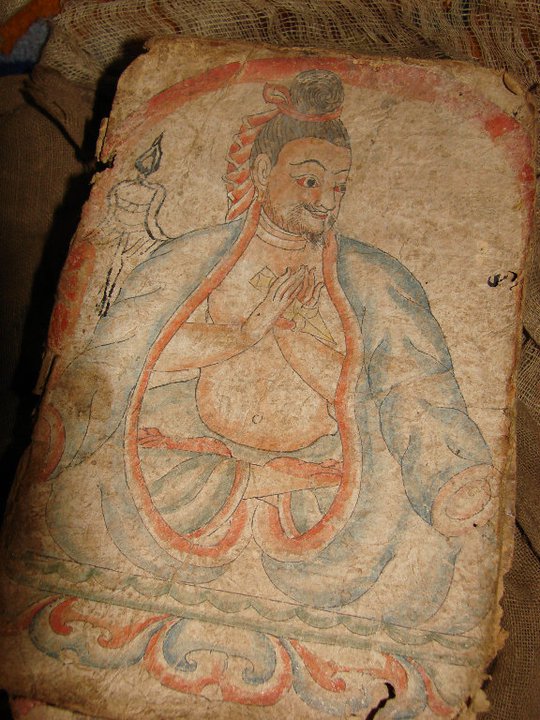
ZZ Drenpa Namkha maybe

Lama Drenpa Namkha

27. Shenchen Luga 996-1035 was a manifestation of Tonggyung Tüchen and was a terton, or treasure discoverer, one who discovers texts and/or sacred objects that are hidden. He had many disciples who began religious centers in their respective home villages.

28. Germi Nyi Öd was born in Zhang Zhung and was a terton.  He lived for three hundred years.

29. Matön Sidzin was a terton who discovered many texts including a ritual invocation of the protector Sipe Gyalmo.

30. Yiltön Khyungö Tsal was born in 1198 and was a great terton who discovered many texts including the main ritual text for the protector and yidam Gekho,

31. Druchen Namkha Yungdrung

32. Wangden Zhuye Lekpo was one of Shenchen Luga’s main disciples and served him as an attendant. He founded the famous Ri Zhing Monastery.

33. Patön Palchok Zangpo was one of the final disciples to meet Shenchen Luga.

34. Me’u Lhari Nyenpo composed a summary of the long version of the Yungdrung Bön Prajnaparamita that was discovered as terma by Shenchen Luga.

35. Drusha Khyungi Gyaltsen was the son of Druchen Namkha Yungdrung.

36. Drusha Jetsun

37. Drutön Nyigyal

38. Yorpo Mépal 1134-1168

39. Nyi Tsultrim Gyaltsen

40. Drogön Dutsi Gyaltsen

41. Drogön Lodro Gyaltsen 1198-1263 was also known as Azha Lodro Gyaltsen.

42. Dulwa Gyaltsen

43. Drutön Gyalwa Yungdrung

44. Namkha Özer

45. Sonam Gyaltsen

46. Sonam Lodro

47. Namkha Sonam

48. Tsewang Gyaltsen

49. Namkha Rinchen

50. Namgyal Kara

51. Khedrup Rinchen Lodro

The Eight Auspicious Symbols

The Eight Auspicious Symbols displayed on a shrine before an image of Lord Tonpa Shenrap at Triten Norbutse Monastery. Photo credit: Raven Cypress Wood

In the Yungdrung Bön tradition, the Eight Auspicious Symbols are displayed in order to bring good luck and increase positive circumstances.  In the Tibetan language, they are called Tashi Dze Gye.  Each symbol has a specific meaning and energy.

endless knot 2 largerThe Glorious Endless Knot, Tibetan: Pal Be’u, symbolizes the interdependence of all things.  It also represents activities and knowledge.

Conch shellThe White Conch Shell, Tibetan: Düng Kar, symbolizes the far-reaching sound of the Buddha’s teachings as well as melodious sound in general.

wheelThe Wheel, Tibetan: Khorlo, sometimes referred to as The Wheel of Dharma, symbolizes the Buddha’s teachings.  Each aspect of the wheel such as the rim, the hub and the spokes all have meaning according to the context within which the wheel appears.

Golden fishThe Golden Fish, Tibetan: Ser Nya, symbolize freedom and liberation, as well as skill with handicrafts and power in the hands for healers.

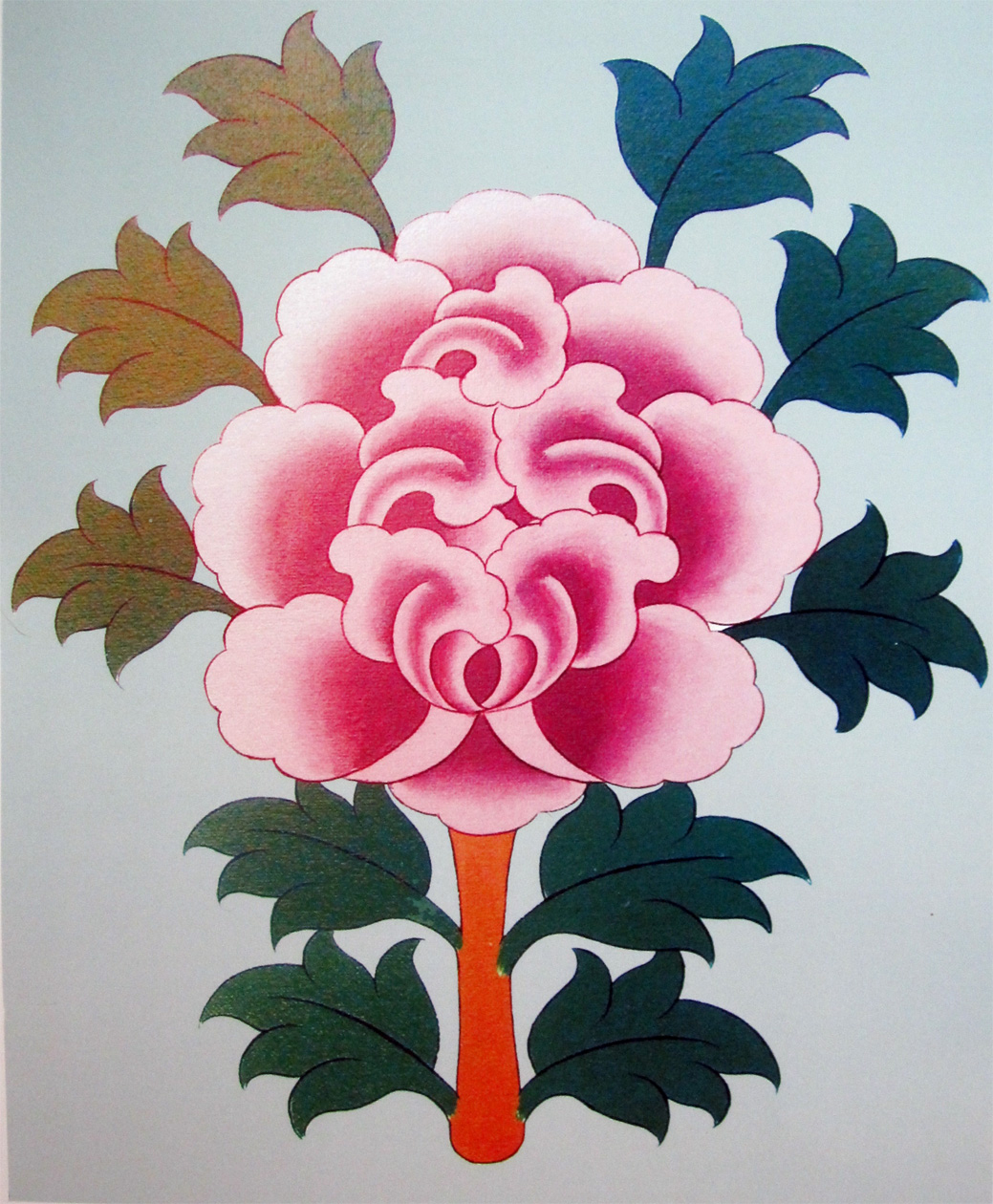
LotusThe Lotus, Tibetan: Pema, symbolizes purification.

Victory BannerThe Victory Banner, Tibetan: Gyaltsen, symbolizes victory over all obstacles, as well as gaining happiness.

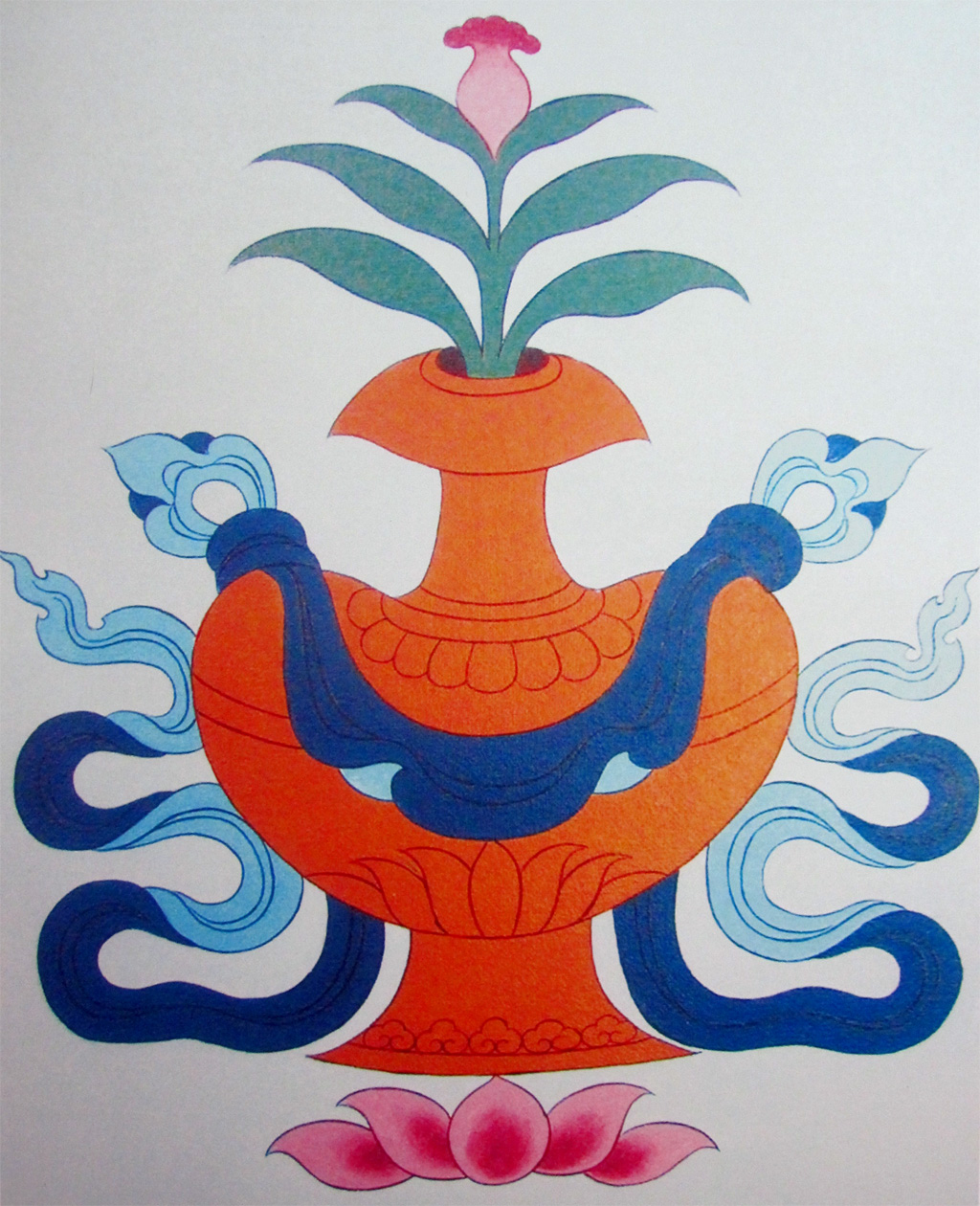
VaseThe Vase, Tibetan: Bumpa, symbolizes wealth and virtues.

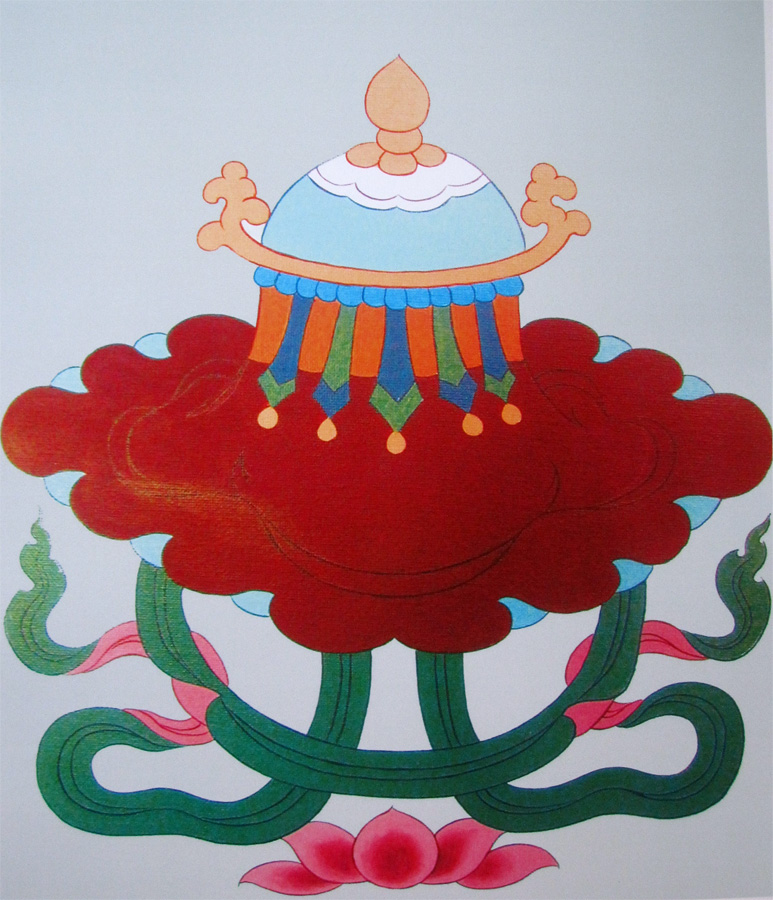
paraso 2lThe Parasol, Tibetan: Duk, symbolizes being protected from suffering as well as prosperity and good luck for the head.

Venerating the Sacred

Tonpa shenrap bday shrine Menri 2015

Shrine during the celebration of the birth of the enlightened Lord Tonpa Shenrab Miwo at Menri Monastery in India. Photo credit: Unknown


The Five Buddha Families of the Yungdrung Bon

Salwa Rangjung and consort

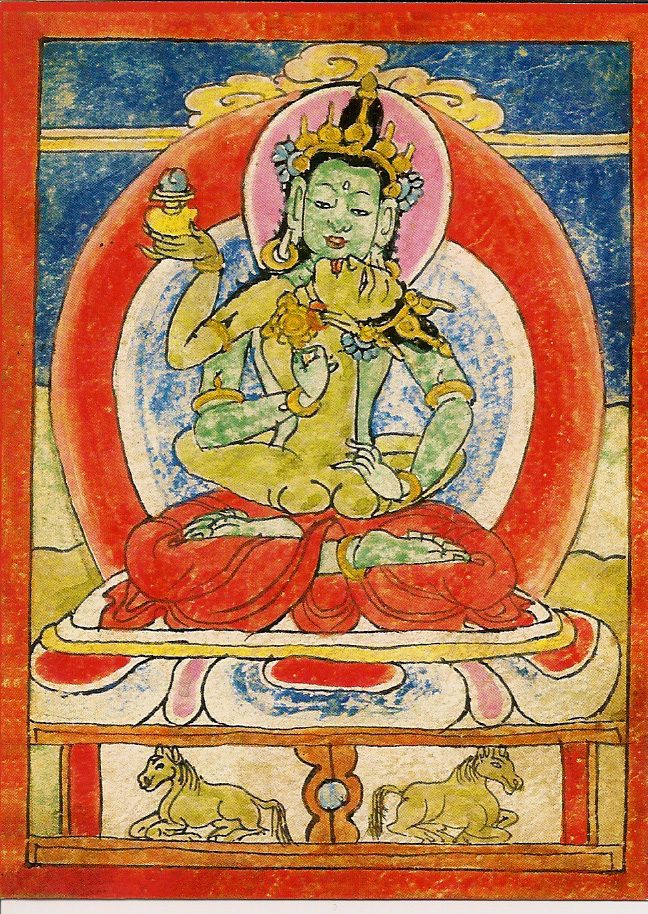
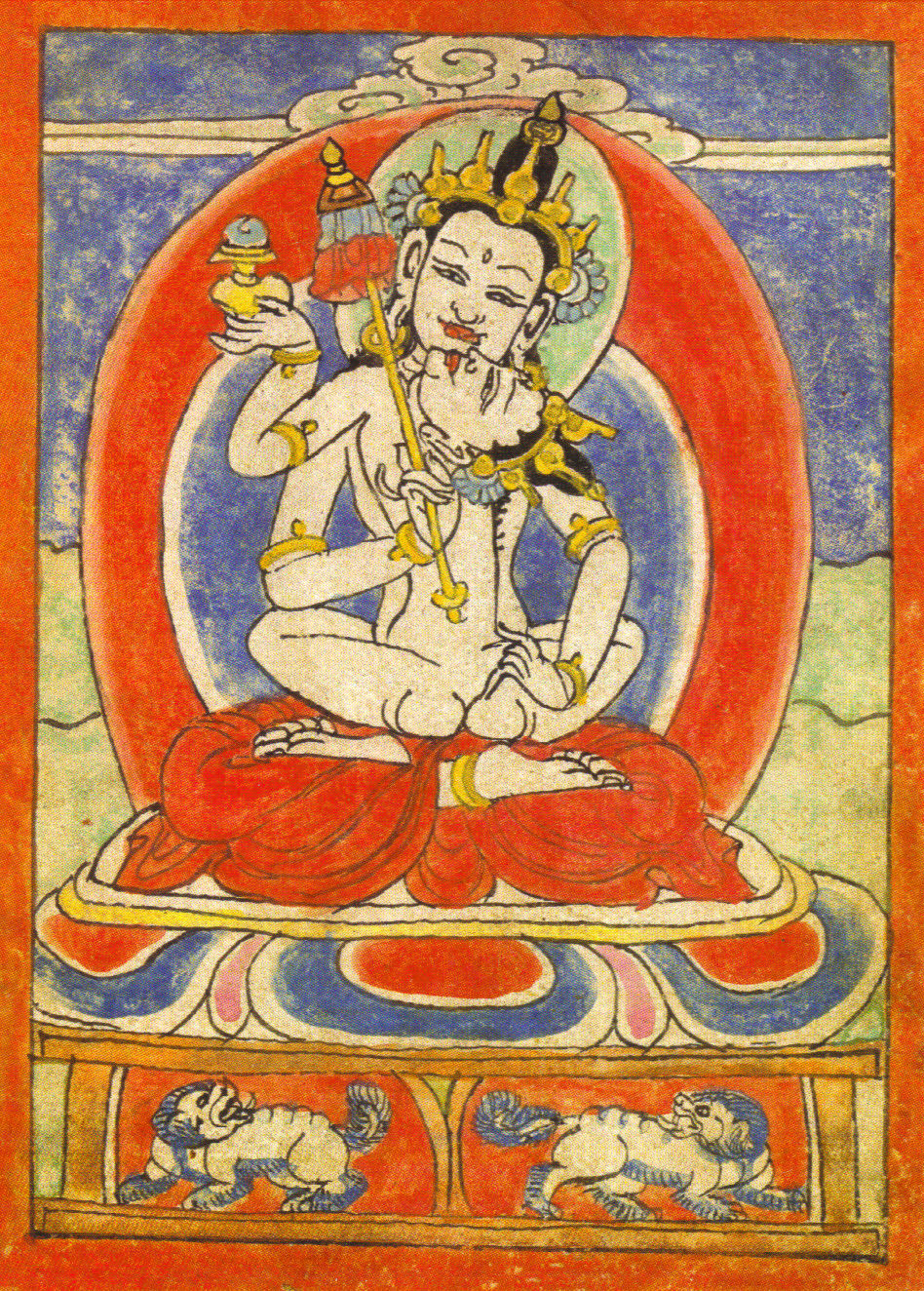
Within the Yungdrung Bön tradition, there are the Five Buddha Families.  Each deity is associated with specific colors, hand objects, wisdoms, elements. organs, impure aspects that are purified, etc.  Here are listed a few of these characteristics along with a line of scripture from the prayer known to Western students as The Precious Garland, an aspirational prayer to support those who have recently died.

Salwa Rangjung is associated with the Eastern direction. This deity is yellow in color, associated with the pure dimension of the element of earth and the consort is the khandro of the earth element.  This deity is associated with Mirror-like Wisdom and the Yungdrung Family.

“When the energy of the earth element dissolves into the water…and the yellow light of one’s own self appears, may I recognize it as the enlightened dimension of Salwa Rangjung.”

Gawa Dondrup and consort

Gawa Döndrup is associated with the Southern direction. This deity is blue in color, associated with the pure dimension of the element of water and the consort is the khandro of the water element.  This deity is associated with All-accomplishing Wisdom and the Precious Jewel Family.

“When the energy of the water element dissolves into the fire…and the pure essence of the water arises as a blue light, may I recognize it as the enlightened dimension of Gawa Döndrup.”

Jetak Ngome and consort

Jetak Ngomé is associated with the Western direction. This deity is red in color, associated with the pure dimension of the element of fire and the consort is the khandro of the fire element.  This deity is associated with Discriminating Wisdom and the Lotus Family.

“When the energy of the fire element dissolves into the wind…and the red light of one’s own self appears, may I recognize it as the enlightened dimension of Jetak Ngomé.”

Gelha Garchuk and consort

Gelha Garchuk is associated with the Northern direction. This deity is green in color, associated with the pure dimension of the element of wind and the consort is the khandro of the wind element.  This deity is associated with the Wisdom of Equanimity and the Dharma Wheel Family.

“When the energy of the wind element dissolves into the consciousness…and the green light of one’s own self appears, may I recognize it as the enlightened dimension of Gelha Garchuk.”

Kunnang Khyappa and consort

Kunnang Khyappa is the central deity of the Five Buddha Families. This deity is white in color, associated with the pure dimension of the element of space, and the consort is the khandro of space. This deity is associated with the Wisdom of Emptiness and the Suchness Family.

“When consciousness dissolves into the base-of-all…and the intermediate state of clear light arises, may I recognize it as the enlightened dimension of Kunnang Khyappa.  Having recognized these experiences as illusory, may I awaken into the self-aware absolute reality!”

Translated from the Tibetan by Raven Cypress Wood

The Field of Accumulation: The Lamas of Pure Discipline, The Monastic Lineage

Tsok zhing according to Menri

In the Yungdrung Bön tradition, the place where the deities and objects of veneration are gathered is called the “Tsok Zhing”, the “Field of Accumulation”.  It is also sometimes translated as the “Field of Merit” or the “Merit Field” because what is being accumulated by paying homage and making offerings to this place is merit, or virtue.  This is the Merit Field according to the Menri Tradition from a drawing done by the great master and scholar HE Yongdzin Tenzin Namdak Rinpoche.

Outline guide for tsok zhing Lineage of Monks

This is the lineage of monastic discipline.  These lineage masters have all taken monk’s vows and therefore wear the appropriate clothing to distinguish them from laypeople.

1. Tritsuk Gyalwa. 16,017 BC – 7,817 BC.  This is the name that the enlightened Lord Tönpa Shenrap Miwoche received upon taking ordination as a monk at the age of 31.  Although he was already a completely enlightened being, he showed the example of taking the path of renunciation.

Tritsuk Gyalwa clearer and smaller

Lord Tonpa Shenrap showing the path of renunciation as the monk Tritsuk Gyalwa

2. Tsukshen Gyalwa

3. Drangsong Gyalwa.  He was one of Tönpa Shenrap’s eight sons.  His birth name was Tobu Bumsang.

4. Tsukse Mawo

5. Tridé Gungdrak

6. Mucho Demdruk

7. Mutsa Trahé.  He was from the ancient land of Tazik.  He was one of The Six Translators who wrote down the words of Lord Tönpa Shenrap into their respective languages and brought them to their respective countries.

8. Tridé Öpo

9. Lhang Lhang Tsukphü

10. Dangwa Yi Ring 

11. Thukar Yeshé

12. Gung Rum Yeshe

13. Ölha Selbar

14. Dzütrul Yeshé

15. Yeshé Tsultrim

16. Yungdrung Tsultrim

17. Tsukphü Tsultrim

18. Gachu Gyalwa

19. Yagong Gyalwa

20. Détsun Rabsel

21. Jotsün Yeshé

22. Muzi Salzang.  He was a manifestation of Mucho Demdruk.  During a time of suppression, he retreated to a cave and went into a meditation of cessation, stopping all thoughts and sensations.  Hundreds of years later, Tribar Tsultrim came upon him in the cave.

23. Tribar Tsultrim.  He was the manifestation of Tsukshen Gyalwa.  He was born a prince but due to external circumstances, he was banished to Mongolia and became a slave of a local ruler.  One day, while looking after the ruler’s horses, he wandered into a cave that looked dark at the entrance but light on the inside.  Once inside the cave, he saw a figure that resembled a monk but whose hair had grown down to the ground and become entangled.  The karmic connection immediately ripened and he joyfully began prostrating and requesting that the monk awake from his meditation.  Day after day, he returned to the cave.  First, one of the monk’s eyebrows moved, then a portion of his face.  On the third day, he yelled at the slave, “Are you a human or non-human obstacle?”  The slave replied that he desired to become his disciple.  The monk agreed and gave him full ordination.  The monk in the cave was Muzi Selzang.

24. Gyalwa Tsukphü.  He was the manifestation of Tobu Bumsang, son of Lord Tönpa Shenrap.

25. Tsukphü Tsultrim.  He was the manifestation of Tsukse Mawo.

26. Lachen Mutur. He was born in 952 AD.  He was also known by his monastic name, Sherap Tsultrim.  He had many disciples, both Yungdrung Bön and Buddhist.  He gave his disciples the four signs of monastic ordination which were, Upper and lower garments, a lotus hat and a meditation mat that were all blue.  He said that if the articles could not be entirely blue, then they should have parallel seams of blue thread.  He was a manifestation of Mutsa Trahé.

27. Nyö Tsün Rinchen Gyaltsen.  He was the manifestation of Tridé Öpo.

28. Nyö Künga Tsultrim.  He was the manifestation of Lhang Lhang Tsukpü.

29. Gar Rinchen Tsukpü.  He was the manifestation of Dangwa Yi Ring

30. Trapü Tsultrim.  He was the manifestation of Tuk Kar Yeshé.

31. Nyöla Drukpa Tsultrim Yeshé.  He was the manifestation of Gang Rum Tsukpü.

32. Sheltsün Yungdrung.  He was the manifestation of Ölha Salwar.

33. Gur Tsün Yungdrung Gyaltsen.  He was the manifestation of Yeshé Tsultrim.

34. Khenlop Namnyi

35. Me’u Gongdzö Ritropa. 1038-1096.  He was the manifestation of Sertok Chejam and founder of the AH Tri Lineage of Dzogchen teachings.  (See previous post, The Saint.)

 After these lamas, the lineage splits into four different lines according to the families of Dru, Zhu, Pa and Shen. The following is the lineage of the 1st Abbot of Menri Monastery, Nyammé Sherap Gyaltsen.

 36. Métön Sherab Ödzer

37. Shentön Namkha Gyaltsen.  He was the manifestation of the great lama, Drenpa Namkha.

38. Yorpo Métön Drakpa Pal.  He was a manifestation of the great lama, Drenpa Namkha.

39. Dütsi Gyaltsen.  He was the manifestation of Lhatri of Zhang Zhung.

40. Darma Gyaltsen.  He was the manifestation of Hripa Gyermé.

41. Tsultrim Lama

42. Drogön Martön Gyallé

43. Bartang Zhangtön Sonam

44. Sumtön Lhabum

45. Shentön Drogön Lodro Gyaltsen

46. Shentön Yeshé Lodro.  In 1173, he built the temple of Darding Sergo Tramo Tsukla Khang in Darding.

47. Men Gongwa Dülwa Lodro

48. Men Gongwa Sherap Lodro

49. Gya Rongwa Yungdrung Yeshé

50. Drutön Tsultrim Yeshé.  He was the Abbot who gave vows to Nyammé Sherap Gyaltsen.

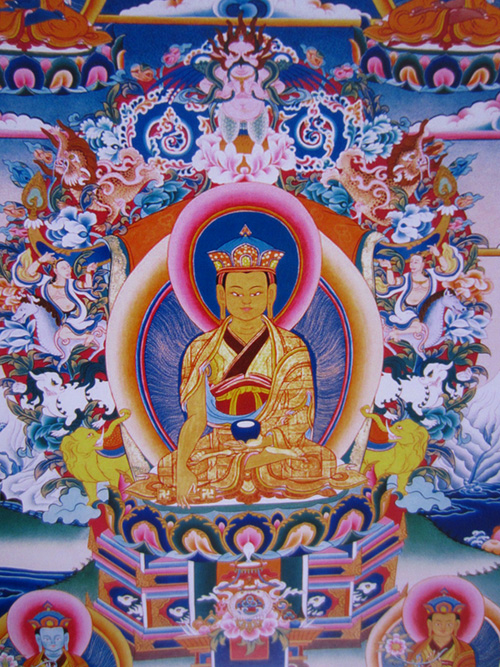
51. Nyammé Sherap Gyaltsen. 1356-1415.  He is known as the Second Buddha and was the founder and 1st abbot of Tashi Menri Monastery in Tibet.  (See previous post, Celebration of the Second Buddha.)