
The chakshing, hand object of Lord Tonpa Shenrap Miwoche, and the Yungdrung Bon flag atop Menri Monastery in Dholanji, India. Photo credit: Unknown
The chakshing, hand object of Lord Tonpa Shenrap Miwoche, and the Yungdrung Bon flag atop Menri Monastery in Dholanji, India. Photo credit: Unknown
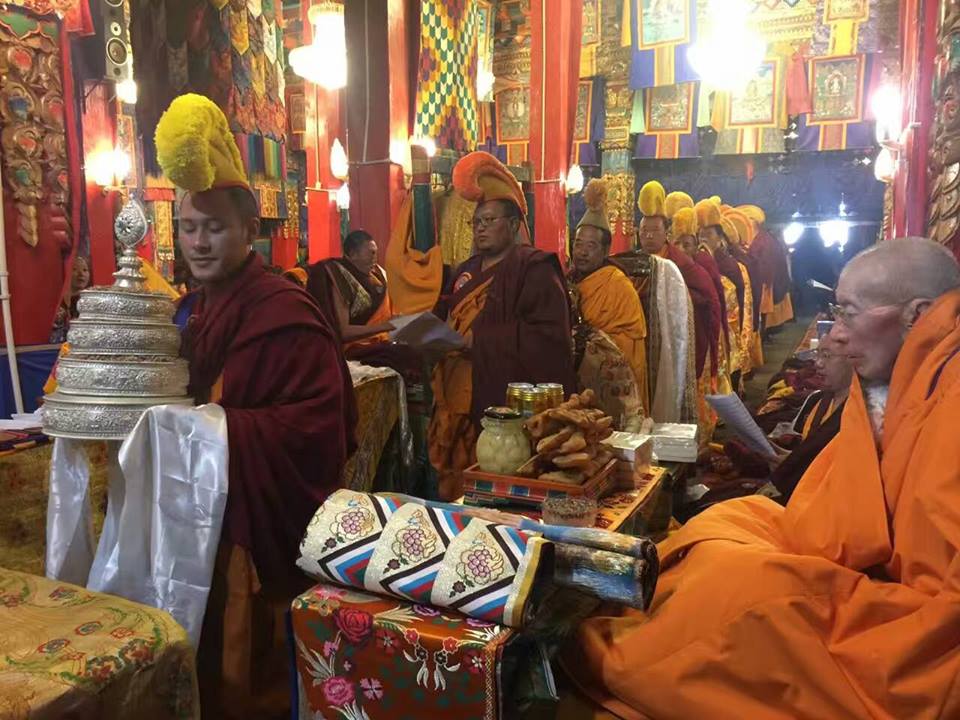
Mandala offering during a special ceremony at Nangzhig Monastery in Tibet. Photo credit: Unknown

“The mala represents the destined connection with the Enlightened Beings. The mala string represents the 84,000 doors of Bön. The head bead represents the principal teacher. The counting beads represent the Six Subduing Shen, the six enlightened Shen who tame the six realms of cyclic existence.” ~from The Advice of Lishu Taring
The mala is called treng wa in Tibetan. It consists of one hundred eight counting beads and one larger main bead, often referred to as the ‘head bead’ or the ‘lama bead’. Malas can have spacer beads which are not counted during recitation of a mantra but are used for decorative purposes or to lengthen the mala and enable it to fit onto an individual’s wrist. Various kinds of counters are often added to the mala so that the practitioner can keep count of the mantra recitations. Malas can be made from various materials. Traditionally, these materials were symbolic because of their energetic qualities. For example, tantric practitioners would often use malas made of bone to represent impermanence.
Before a mala is used, the practitioner will have it consecrated by a lama. This blesses it and also removes any contamination that the materials might carry with them that could be an obstacle to obtaining the benefit of the recitations. Although there are one hundred eight beads, a single round of recitations is counted as one hundred. In this way, if any beads have accidentally been skipped during the recitation, they are accounted for with the ‘extra’ eight beads. Many practices require a commitment to recite a minimum of one hundred thousand repetitions of a mantra. Therefore, these ‘extra’ beads ensure that the commitment has been fulfilled. In general, during recitation, the practitioner is not allowed to eat, drink, talk, sneeze, spit or cough. These activities expel or diminish the specific power of the mantra that is being cultivated. Once the session of mantra recitation is complete, the mala is rubbed gently between the hands and blown upon by the practitioner. In this way, the mala becomes further empowered and blessed by the mantra.
The mala is a sacred object and should not be worn as jewelry. It should be kept clean and not be handled by others. By wearing the mala on the wrist or carrying it in a pocket on the body, it acts as a form of protection. The mala is also sometimes used for divination or healing purposes. Lamas will sometimes give away their mala intact, or one bead at a time. Because of the power of the lama’s practice and recitation, this gift is a great blessing.
Raven Cypress Wood© All Rights Reserved
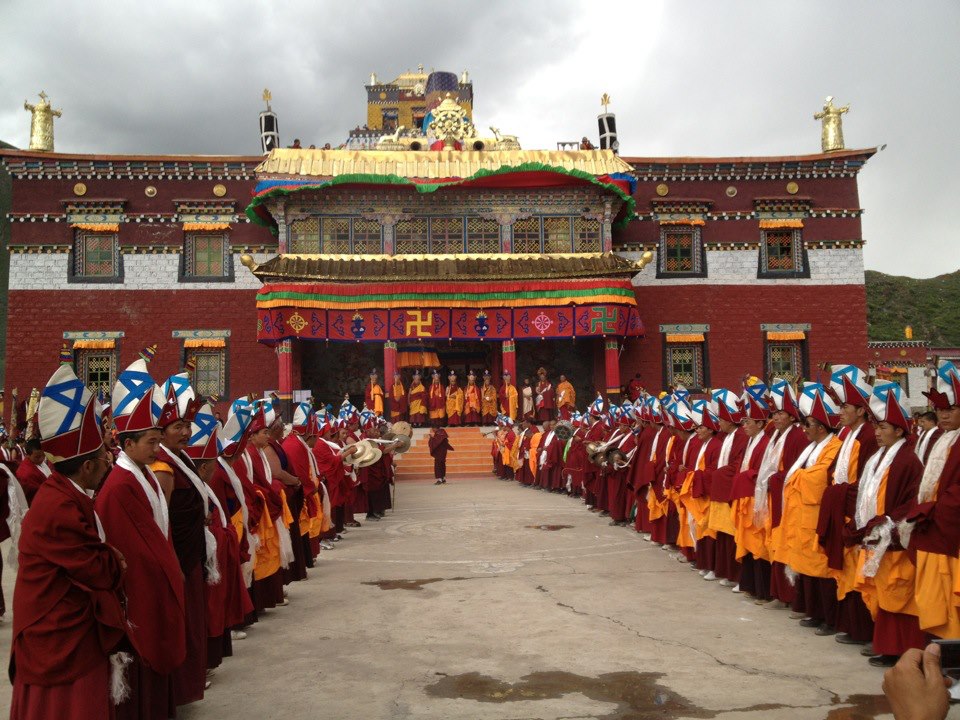
Gangru Gon Dargye in Tibet, founded in 1310. Photo credit: Unknown

Tsok zhing according to MenriThe Yungdrung Bon Merit Field of the Menri Tradition
In the Yungdrung Bön tradition, the place where the deities and objects of veneration are gathered is called the “Tsok Zhing”, the “Field of Accumulation”. It is also sometimes translated as the “Field of Merit” or the “Merit Field” because what is being accumulated by paying homage and making offerings to this place is merit, or virtue. This is the Merit Field according to the Menri Tradition from a drawing done by the great master and scholar HE Yongdzin Tenzin Namdak Rinpoche.
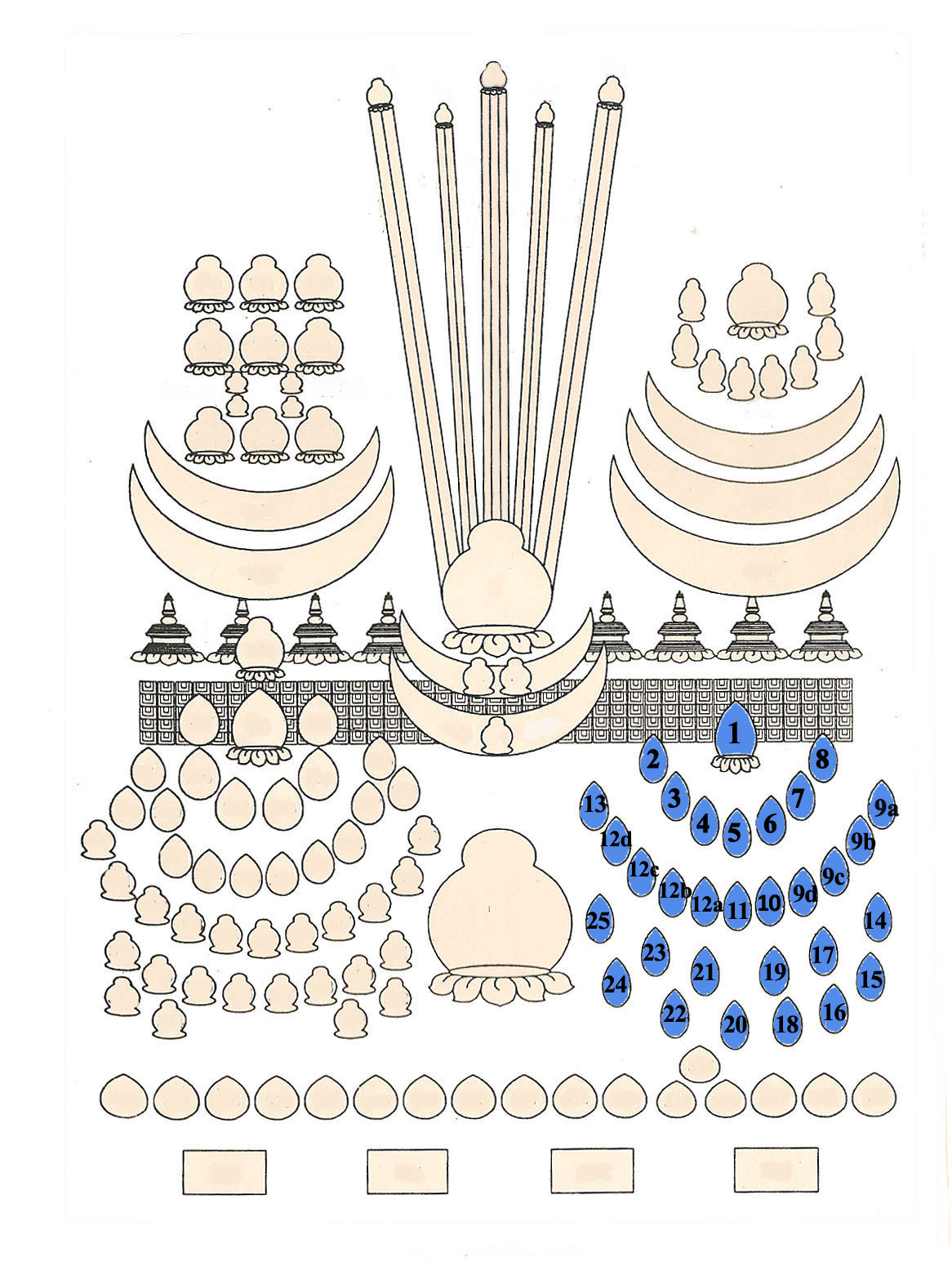
The Ocean of Khandro are depicted as figures #1-25. Khandro (Sanskrit: dakini) literally translates as ‘sky-goer’ or ‘one who moves in the sky’. Khandro are a class of female beings who protect and serve the religious tradition as well as bestow spiritual attainments. Khandro can be classified in many ways. The classification below is according to the Tsok Zhing text. Each of the khandro are adorned with the six bone ornaments.
#1-8 Wisdom Khandro
1. Kalpa Zangmo, she has one face and four arms
2. Miyo Tenma
3. Dekma Kündrol
4. Kyema Ötso, Khandro of the Mother Tantra
5. Namkha Déden
6. Dakpa Kündü
7. Salwa Dröbéb
8. Tukjé Kündrol, Khandro of Tummo and Tsa Lung

Khandro Kalpo Zangmo
#9-13 Action Khandro
9a. Ürgyen Khandro, Khandro from Ürgyen
9b. Ürgyen Khandro, Khandro from Ürgyen
9c. Ürgyen Khandro, Khandro from Ürgyen
9d. Ürgyen Khandro, Khandro from Ürgyen
10. Choza Bönmo, Khandro of the female lineage of the Yétri Tasel Dzogchen
11. Öden Barma, Consort of Yidam Drenpa Namkha
12a. Gyagar Khandro, Khandro from India
12b. Gyagar Khandro, Khandro from India
12c. Gyagar Khandro, Khandro from India
12d. Gyagar Khandro, Khandro from India
13. Drushé Khandro, Khandro from Drusha
#14-25 Animal-headed Khandro
14. Durjé Ü, Heron-headed Khandro
15. Pharwé Ü, Coyote-headed Khandro
16. Chusin Ü, Crocodile-headed Khandro
17. Duktrul Ü, Poisonous Snake-headed Khandro
18. Chè Chang Ü, Jackal-headed Khandro
19. Sengé Ü, Lion-headed Khandro
20. Khyungi Ü, Garuda-headed Khandro
21. Takgi Ü, Tiger-headed Khandro
22. Zikgi Ü, Leopard-headed Khandro
23. Domgi Ü, Bear-headed Khandro
24. Drékyi Ü, Yellow Bear-headed Khandro
25. Khaté Ü, Crow-headed Khandro
Raven Cypress Wood ©2015
 Nine Ways