Monthly Archives: November 2021

New Book Release – Sacred Smoke: The Ritual Practice of Fumigation and Offering in the Yungdrung Bön Religious Tradition

Sacred Sky Press has just released the publication of Sacred Smoke: The Ritual Practice of Fumigation and Offering in the Yungdrung Bön Religious Tradition by Raven Cypress Wood. This book is both an in-depth overview and a practice manual for the ritual commonly known as sang [Tibetan: bsang]. Performed as a daily practice as well as on special occasions, the sang ritual of fumigation and offering is pervasive throughout both the Yungdrung Bön and Buddhist traditions because of its important relevance to ordinary people, lay practitioners, and monastics. The practice of sang is categorized within the Second Way of the Nine Ways of Bön and uses fragrant smoke to clear defilements from both the environment and its inhabitants.
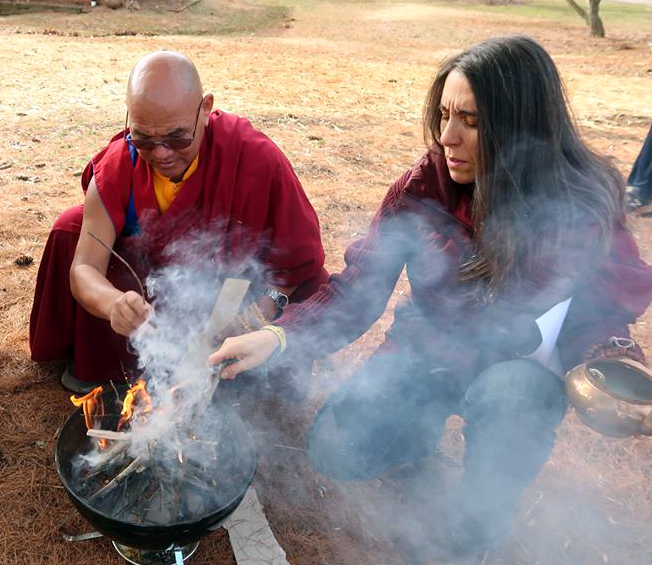
The author and Murig Khenpo Nyima Künchap Rinpoche prepare to perform the sang ritual for the lu.

The first part of Sacred Smoke introduces the reader to the sang ritual and provides a deeper understanding of the source, meaning, and purpose of the ritual. This includes descriptions of the kinds of defilements beings purified, the recipients of the offerings, and the benefits of performing the ritual.

It is called removal because it removes the negative from the positive. It is called removal because it removes the defiled from the pure. It is called removal because it removes poverty. It is called removal because it removes obstructions.

—Lord Buddha Tönpa Shenrap Miwoche describing the category of rituals containing the sang practice in Sacred Smoke: The Ritual Practice of Fumigation and Offering in the Yungdrung Bön Religious Tradition

And,

For ordinary people, performing the sang ritual and receiving its benefits can increase their faith in the truth of the teachings of Buddha Tönpa Shenrap. For them, the sang ritual can be an entrance to the higher teachings of enlightenment by creating a basis of faith in the practices.

—Excerpt from Sacred Smoke: The Ritual Practice of Fumigation and Offering in the Yungdrung Bön Religious Tradition

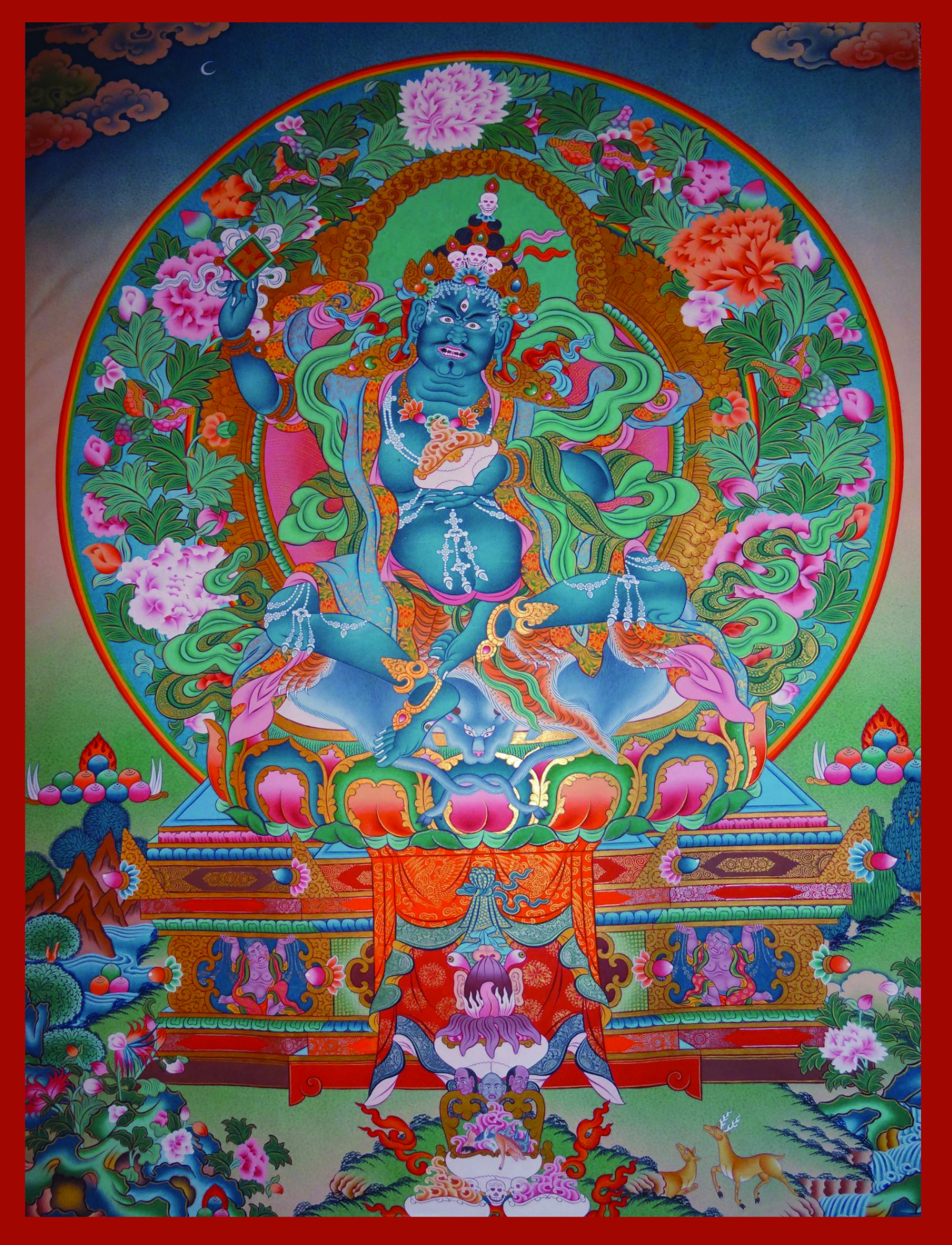
The second part of Sacred Smoke provides the liturgical texts needed for the ritual including the original Tibetan with phonetics and the corresponding English translations. In addition to the sang ritual prayers according to the Menri tradition, Sacred Smoke includes texts for performing the sang ritual composed by the esteemed 23rd Menri Trizin, the sang ritual for the lu, and invocations to Blue Dzmbhala and Chammo Lamlha, the goddess of travel. Detailed instructions are given for how to perform the the ritual in either an extensive and more elaborate way, or a condensed version.

You who have incredible magical power, lords of intermediate space, lords of the earth and lords of the rivers and lakes who judge between right and wrong;

You are living here alongside human beings in this wonderful land.

You, great rulers of this area, when invited by this practitioner, please come to this place of offerings.

—Excerpt from Fumigation Offering for Any Area, included within Sacred Smoke: The Ritual Practice of Fumigation and Offering in the Yungdrung Bön Religious Tradition

Sacred Smoke: The Ritual Practice of Fumigation and Offering in the Yungdrung Bön Religious Tradition by Raven Cypress Wood is a 175 page hardcover with black and white images. It can be purchased from the distributor from this link: https://www.lulu.com/en/us/shop/raven-cypress-wood/sacred-smoke/hardcover/product-977vd8.html?page=1&pageSize=4

Raven Cypress Wood is also the author of other Sacred Sky Press publications including:

Indestructible: The Longevity Practice of Tséwang Rikdzin https://www.lulu.com/en/us/shop/raven-cypress-wood/indestructible-the-longevity-practice-of-tsewang-rikdzin/hardcover/product-1g2pdvkp.html?page=1&pageSize=4

The Heartdrop of Jamma, the Loving Mother https://www.lulu.com/en/us/shop/raven-cypress-wood/jamma-nying-tik-color/paperback/product-1g274888.html?page=1&pageSize=4
The Time to Engage with the Practices of the Great Lama and his Twin Sons

The Great Lama Drenpa Namkha

Within the Yungdrung Bön religious tradition, the 10th lunar day of each month is dedicated to the practice of the great lama Drenpa Namkha and his two sons, Tséwang Rikdzin and Pema Tongdrol. From now until the Tibetan New Year on March 3rd 2022, these lunar days coincide with the Western dates:

  • November 14th 2021
  • December 13th 2021
  • January 12th 2022
  • February 11th 2022

Namo!

With the yearning, single-pointed devotion of my body, speech, and mind, I and the group of mothers, the other sentient beings who are equal to the far reaches of the sky, go for refuge to the Bönku Küntu Zangpo.

We go for refuge to the Great Lama Drenpa Namkha.

We go for refuge to Nyima Öden Barma.

We go for refuge to the protector of migrating beings, Tséwang Rikdzin.

We go for refuge to the Great Mother Tukjé Kündrol.

We go for refuge to Trogyal Yungdrung Tongdrol.

We go for refuge to the tertön Khyung Gö Tsal.

We for refuge to Patön Gyalwa Shérab.

We go for refuge to Patön Döndrup Bum.

We go for refuge to Nyammé Palden Zangpo.

We go for refuge to Patön Namkha Zangpo.

We go for refuge to Chang Chup Semden Palchok Zangpo.

We go for refuge to Tenzin Rikdzin Namgyal.

We go for refuge to Rikdzin Lhundrup Palzang.

We go for refuge to Drendral Tenpa Özer.

We go for refuge to the protector of migrating beings, Namkha Gyalpo.

We go for refuge to the kind root lama.

We go for refuge to the compassionate guide lama, who has the blessings of the lamas of the lineage.

We go for refuge to the knowledge holders and yungdrung sempa of the male lineage.

We go for refuge to the group of khandro of the female lineage.

We go for refuge to the holy lamas of the lineage of the accomplishment of longevity.

Through your compassion radiating as light from unmanifested space, please bestow the accomplishment of indestructible longevity to me!

— From The Longevity Practice of Drenpa Namkha

Tibetan translation by Raven Cypress Wood

Raven Cypress Wood ©All Rights Reserved. No content, in part or in whole, is allowed to be used without direct permission from the author.

Don’t want to miss a post? Scroll to the bottom and click “Follow this blog.”

The 23rd Annual Debate According to the Yeru Tradition

Monks at Menri Monastery debate during the 22nd annual Yeru tradition debate

From the 1st-30th of the 9th lunar month, Western calendar dates October 7th – November 4th 2021, Pal Shenten Menri Ling Monastery in India held its 23rd Annual Debate According to the Yeru Tradition for the benefit of educating the dialectic school students. These debate sessions are held according to the tradition of the renowned Yeru Wensaka tradition and are based upon a text of logic written by Azha Drogön Lodro Gyaltsen Rinpoche (1198-1263). He was the 8th abbot of Yeru Wensaka Monastery and many of his writings form a major part of the dialectic school curriculum. His text of logic, A Summary of the Valid Cognition of Suchness, A Treasury of Knowledge, is considered the foundation of philosophy. Because it is very old and unique, it is quite difficult to understand. He is considered to have been an emanation of the wisdom deity Mawé Sengé, and had visions of the Great Lama Drenpa Namkha who bestowed upon him instructions and transmissions, as well as secret instructions regarding the practice of the wisdom protector Yeshé Walmo.

The Yungdrung Bön monastic center of Yeru Wensaka in Tsang, Tibet was founded in 1072 by the esteemed Dru family lineage in order to promote the study of philosophy. It was the main Yungdrung Bön study center until it was destroyed by flood in 1386 and replaced with the construction of Menri Monastery in 1405.

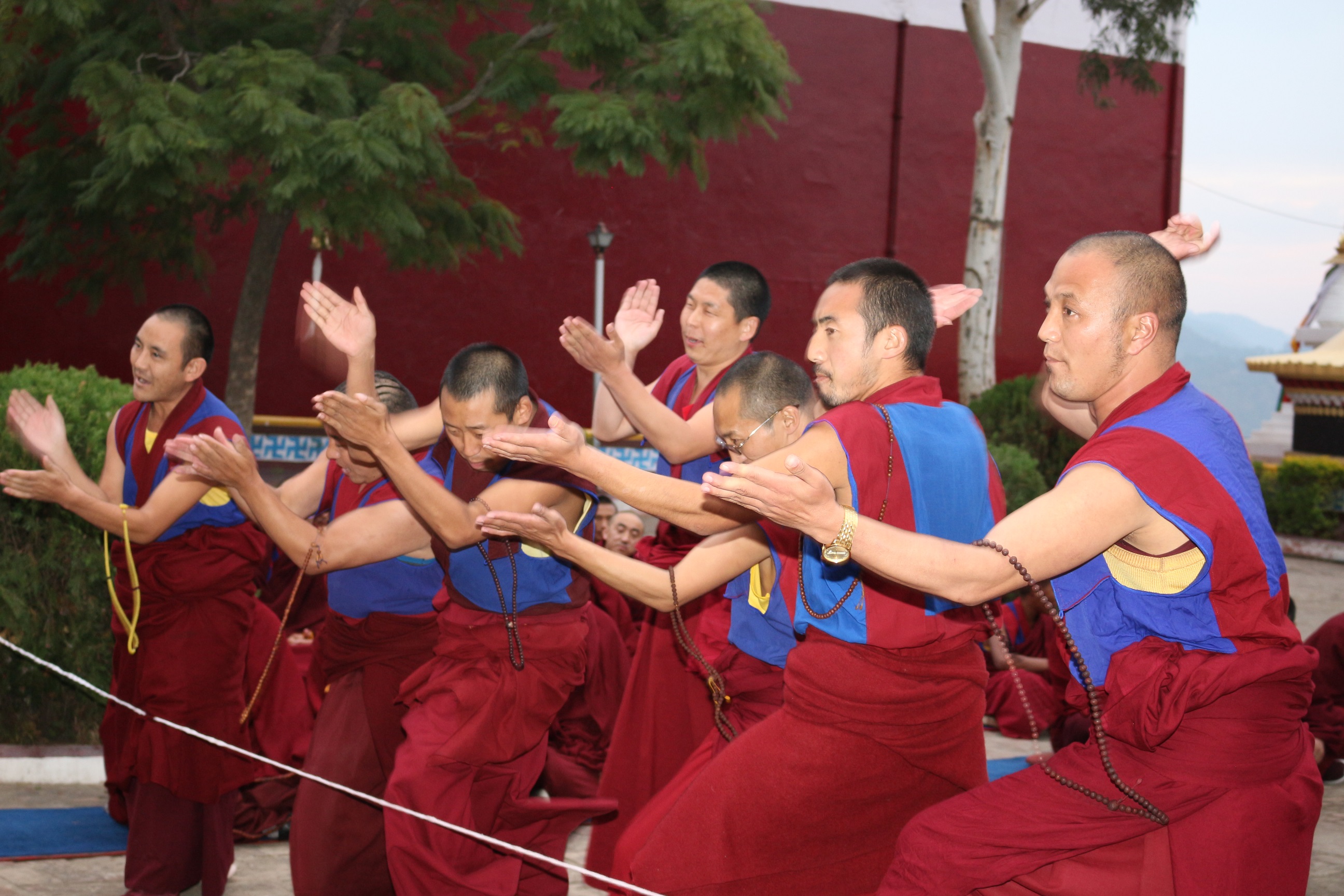
Menri monks engaging in debate

During this month-long training, students in the dialectic school will rise early and continue their study, memorization, and recitation practice late into the night. Subjects that are studied and debated include the two truths, the three valid means of cognition, the way of establishing an object of valid cognition, and so forth. Students practice together as a group and also invite His Holiness 34th Menri Trizin Rinpoche and His Eminence Menri Pönlop Rinpoche to witness performances of formal debate, and to give their commentary regarding the difficult points of the philosophical text.

The cycle of debate within the Yungdrung Bön is used as a means to cut the three obscurations to knowledge of (1) not understanding, (2) misunderstanding, and (3) doubt, especially as it relates to the nature of ultimate reality. This is done by applying systematic logical reasoning to a particular view or position in order to ascertain if the view can be established as either true or untrue. This is done through using syllogisms. Syllogism is a type of argument that applies deductive reasoning to form a conclusion regarding the validity or lack of validity of a given thesis. In Tibetan philosophical debate, the syllogism takes the form of a thesis and a proof stated together in a single sentence. This is presented by one or two monks who are seated. They are the defenders of the thesis. One or more monks stand before the defenders and, using only scriptural quotations and proceeding from one logical step to the next, try to prove that the thesis cannot be established as valid. They are the opponents. The opponents are restricted in their response to either state that the major premise of the thesis is not true, the minor premise of the thesis is not true, or to accept the thesis as true. The defenders must give consistent responses without contradicting their original statement. In this way, wrong views are clarified through logical reasoning.

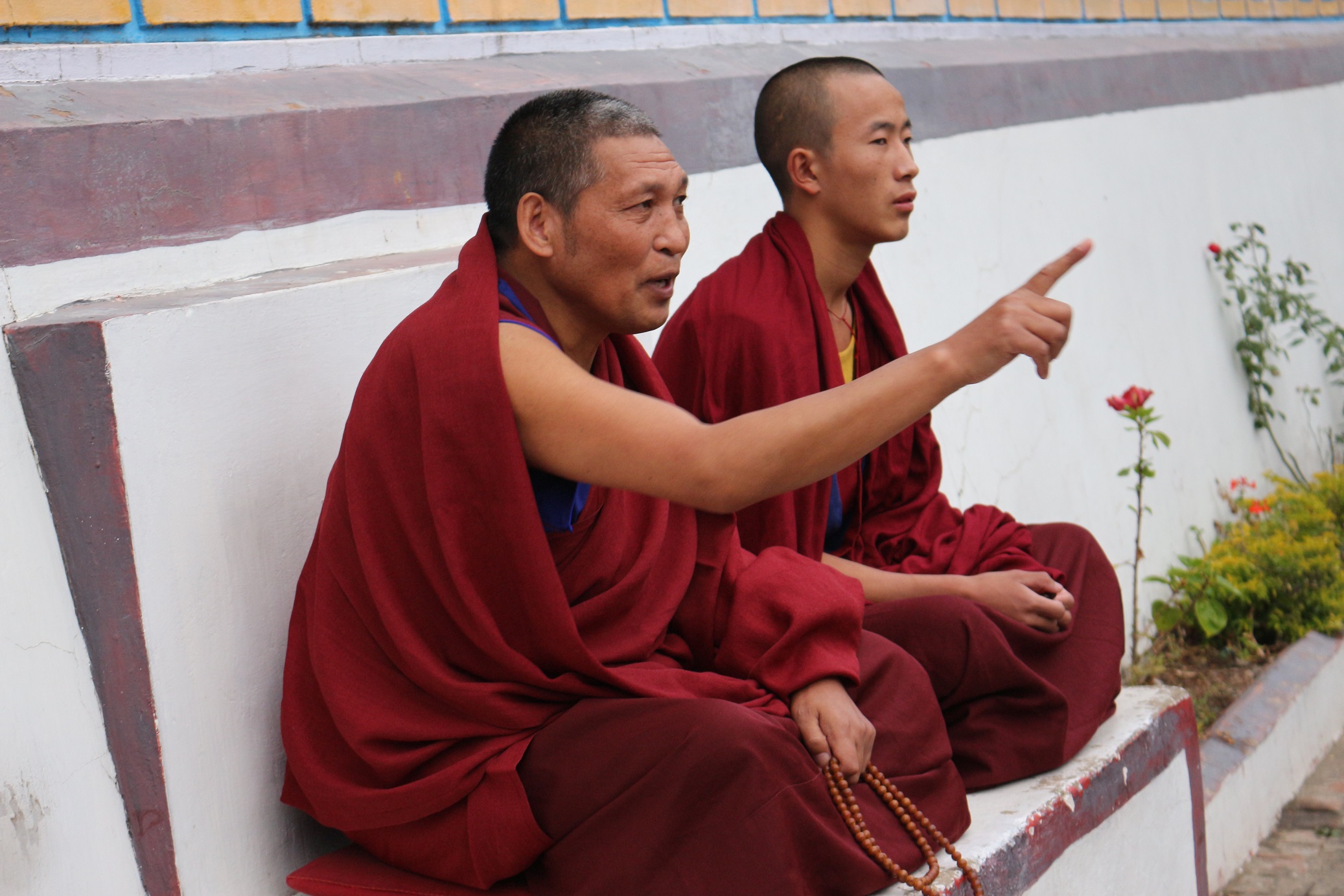
two sitting monks defend their posited statement

A video of the special debate retreat at Menri Monastery has been created by Menri Media and can be viewed here: https://www.youtube.com/watch?v=DAR8oDPQ2ag Monastic debates can appear quite aggressive. However, it is important to remember that the energy of defending and attacking is not toward each other but towards the statement, or idea, that has been presented. The choreography of those attacking a statement as a wrong view is an outward expression of the power of wisdom. Even the particular spot on the hands that is strongly clapped together is considered to be the area of a channel through which wisdom flows.

Raven Cypress Wood ©All Rights Reserved. No content, in part or in whole, is allowed to be used without direct permission from the author.

Don’t want to miss a post? Scroll to the bottom and click “Follow this blog.”

Want to join the mandala of Nine Ways supporters? Follow this link https://ravencypresswood.com/donate/