
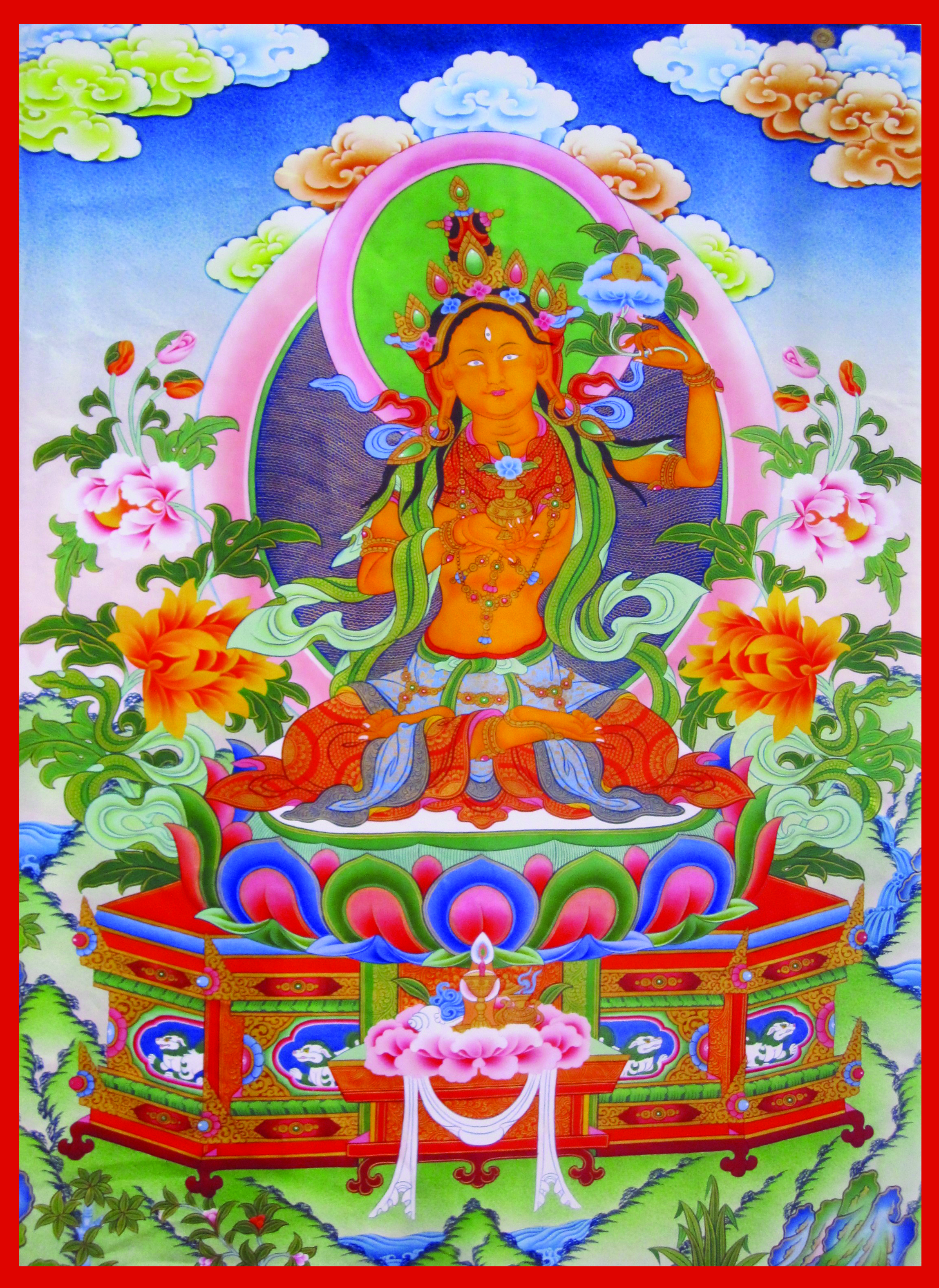
Sherap Jamma with lions underneath her seat as painted by Lama Kalsang Nyima. Photo credit: Raven Cypress Wood
Iconography is the use of images and symbols to convey meaning or concepts especially in a spiritual context. The iconography within the Yungdrung Bön religious tradition is detailed within many volumes of scriptures. Symbolic meanings are specific and often complex depending upon the context. Meaning is attributed to includes composition, proportions, color, hand objects, clothing, ornamentation, etc. Sometimes, a few of these details are left to the interpretation of the artist but they are most often prescribed within the sacred text.

A throne depicting elephants under the main figure
The Tibetan thangkha is a painting on canvas that is framed in brocade and has dowels at the top and bottom to enable the painting to be hung and also rolled like a scroll. These paintings are rolled from the bottom towards the top. There are often ties at the top that are used to fasten the rolled painting and allow it to be easily carried.

A throne depicting horses under the main figure
An example of the use of iconography within the Yungdrung Bön religious tradition is demonstrated by the images of animals depicted underneath the throne of enlightened deities. This position symbolizes that the deity tames or transforms the quality associated with the animal. According the oral teachings of the preeminent scholar and spiritual master His Eminence Yongdzin Tenzin Namdak Rinpoche, the five common animals depicted in this way symbolize the following: the lion symbolizes anger, the elephant symbolized ignorance, the garuda symbolizes desire, the horse symbolizes jealousy, and the dragon symbolizes pride.
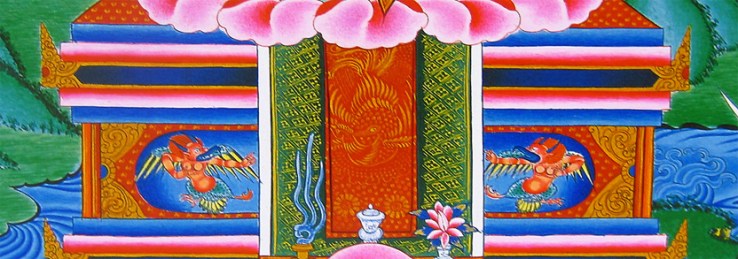
A throne depicting garudas under the main figure
For example, although the buddha Sherap Jamma has all of the perfected qualities, emphasis is placed on her teaching sentient beings to transform anger and hatred into love and kindness. This is symbolized by lions being depicted on the throne underneath her as she sits peacefully.

A throne depicting each of the five animals.All translations and content by Raven Cypress Wood ©All Rights Reserved. No content, in part or in whole, is allowed to be used without direct permission from the author.
Don’t want to miss a post? Scroll to the bottom and click “Follow this blog.”



 Nine Ways